

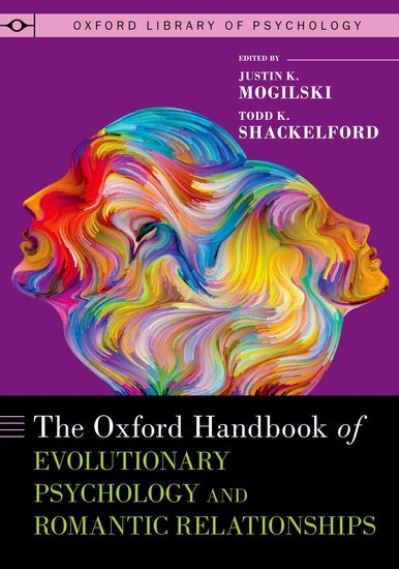
This handbook showcases the empirical and theoretical advancements in the evolutionary study of romantic relationships, tracing the psychological mechanisms that shape strategic computation and behavior across the lifespan of an intimate partnership. Written by global experts in their fields, each chapter provides an overview of historic and contemporary research on the psychological mechanisms and processes underlying initiation, maintenance, and dissolution of romantic relationships. The volume discusses popular and cutting-edge methods for data analysis and theory development, critically analyzing the state of evolutionary relationship science. It provides discerning recommendations for future research and integrates a broad range of topics (e.g., partner preference and selection, competition and conflict, jealousy and mate guarding, parenting, partner loss and divorce, and post-relationship affiliation) that are discussed alongside major sources of strategic variation in mating behavior, such as sex and gender diversity, developmental life history, neuroendocrine processes, technological advancement, and culture. The Oxford Handbook of Evolutionary Psychology and Romantic Relationships enriches students' and established researchers' views across a diverse cross-section of relationship scholars and clinicians to incorporate evolutionary theorizing into their professional work, including those interested in social change and continuity in social and cultural psychology, sociology, political science, healthcare, and related fields.
| ISBN: | 9780197524718 |
| Publication date: | 12th April 2023 |
| Author: | Justin K Mogilski, Todd K Shackelford |
| Publisher: | Oxford University Press an imprint of OUP USA |
| Format: | Hardback |
| Pagination: | 864 pages |
| Series: | Oxford Library of Psychology Series |
| Genres: |
Psychological theory, systems, schools and viewpoints Social, group or collective psychology |
This handbook showcases the empirical and theoretical advancements in the evolutionary study of romantic relationships, tracing the psychological mechanisms that shape strategic computation and behavior across the lifespan of an intimate partnership. Written by global experts in their fields, each chapter provides an overview of historic and contemporary research on the psychological mechanisms and processes underlying initiation, maintenance, and dissolution of romantic relationships. The volume discusses popular and cutting-edge methods for data analysis and theory development, critically analyzing the state of evolutionary relationship science. It provides discerning recommendations for future research and integrates a broad range of topics (e.g., partner preference and selection, competition and conflict, jealousy and mate guarding, parenting, partner loss and divorce, and post-relationship affiliation) that are discussed alongside major sources of strategic variation in mating behavior, such as sex and gender diversity, developmental life history, neuroendocrine processes, technological advancement, and culture. The Oxford Handbook of Evolutionary Psychology and Romantic Relationships enriches students' and established researchers' views across a diverse cross-section of relationship scholars and clinicians to incorporate evolutionary theorizing into their professional work, including those interested in social change and continuity in social and cultural psychology, sociology, political science, healthcare, and related fields.
The Oxford Handbook of Evolutionary Psychology and Romantic Relationships features in the following genres: Psychological theory, systems, schools and viewpoints, Social, group or collective psychology
The Oxford Handbook of Evolutionary Psychology and Romantic Relationships is available in Hardback
The Oxford Handbook of Evolutionary Psychology and Romantic Relationships was written by Justin K Mogilski, Todd K Shackelford and published by Oxford University Press an imprint of OUP USA
The Oxford Handbook of Evolutionary Psychology and Romantic Relationships has 864 pages
Yes it is part of Oxford Library of Psychology Series series
£119.25