Winner of the Man Booker 2005.
This review is provided by bookgroup.info.
THE SEA is not a likely story: there is this hypochondriacal, slightly sodden, aesthetically
fastidious art historian, supposedly engaged in a scholarly monograph on Bonnard, who totters off down a memory lane which is "rutted as always was".
Well, but his wife of thirty years has died, as she said, of an illness quite inappropriate to their style of living. So, forlorn and bewildered, Morden has this vivid dream, and, waking, feels drawn to revisit the scene of a youthful seaside holiday. He is not drawn to revisit the chalet with its smelly little wooden outhouse where he and his lard-white father and resentful mother went for their holidays, but to the Cedars in Station Road.
The Grace family holidays at the Cedars; their motor car stands in the drive; Mr. Grace, Carlo, deeply suntanned, drinks ice blue gin with a slice of lemon; they have a picnic basket, folding canvas chairs, bathing dresses and a travelling rug. Mrs. Grace, Constance, Connie, wears sun glasses with white plastic rims, smokes cigarettes, and regards her husband with tolerant amusement. There are the twins, a boy and a girl, Morden's age, and a young, unhappy
governess.
THE SEA is a book to be savoured, remembered, and reread: when the Grace's motor car sweeps by "Tall grasses in the ditch, blond like the woman's hair, shivered briefly and returned to their former dreaming stillness."
As Morden tells his story with a shrug and silent laughter (and sometimes with tears) he keeps company with composers, poets, Greek gods, artists and philosophers. But Mrs. Grace, the twins and the hapless governess prevail. And always The Waves. Max Morden has come amongst us, and will remain with us, probably, for ever and ever. Amen.
Sarah Broadhurst's view...
Max writes about art, he tells his story in flowing, gracious prose. Recently widowed, he comes to a seaside house he knew as a child and reflects. Alternating with memories of childhood holidays and his life with his wife, Anna, mostly her last year when they both knew she was dying of cancer, this beautiful book definitely deserved its Man Booker win.
Similar this month: Joseph Boyden.
Comparison: Dermot Bolger, Barry Unsworth, Simon Mawer.

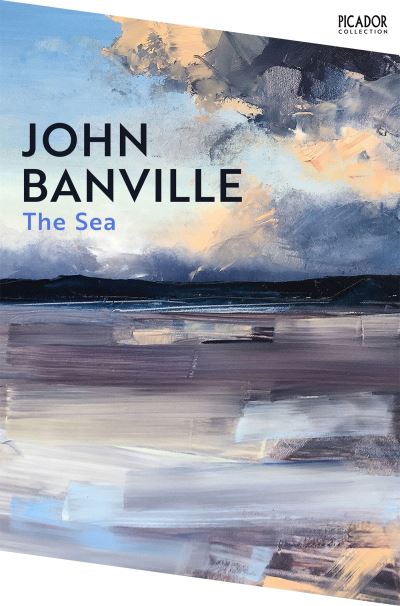
The Sea is John Banville's remarkable, Booker prize-winning exploration of memory, childhood and loss.'You can smell and feel and see his world with extraordinary clarity. It is a work of art, and I'll bet it will still be read and admired in seventy-five years' - The TimesWhen art historian Max Morden returns to the seaside village where he once spent a childhood holiday, he is both escaping from a recent loss and confronting a distant trauma.The Grace family had appeared that long-ago summer as if from another world. Mr and Mrs Grace, with their worldly ease and candour, were unlike any adults he had met before. But it was his contemporaries, the Grace twins Myles and Chloe, who most fascinated Max. He grew to know them intricately, even intimately. What happened next would haunt him for the rest of his years, and shape everything that was to follow.Part of the Picador Collection, a series celebrating fifty years of Picador books and showcasing the best of modern literature.
| Primary Genre | Modern and Contemporary Fiction |
| Recommendations: |
The Sea is John Banville's remarkable, Booker prize-winning exploration of memory, childhood and loss.'You can smell and feel and see his world with extraordinary clarity. It is a work of art, and I'll bet it will still be read and admired in seventy-five years' - The TimesWhen art historian Max Morden returns to the seaside village where he once spent a childhood holiday, he is both escaping from a recent loss and confronting a distant trauma.The Grace family had appeared that long-ago summer as if from another world.
The Sea features in the following genres: Modern and Contemporary Fiction, eBooks of the Month, Book Club Recommendations, General Fiction, Fiction, Recommendations
Paperback, Hardback. £9.89, down from the £10.99 cover price. In Stock.
The Sea was written by John Banville and published by Picador an imprint of Pan Macmillan
The Sea has 263 pages
Yes it is part of Picador Collection series
£9.89, reduced from £10.99. In Stock.