LoveReading Says
Simon Beckett was shortlisted for the CWA Dagger in the Library 2009 - the prize awarded for an author's body of work.
A thrilling, twisted story with the resolution both expected and unexpected but the finale is a complete surprise – wow. Set on a remote island in the Outer Hebrides, cut off by bad weather, it involves murders, revenge and madness and is the second from this excellent author who is well worth investing in. I think he is terrific.
Comparison: Kathy Reichs, Ian Rankin, Mo Hayder.
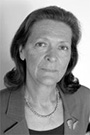
Reviewed by Sarah BroadhurstSarah Broadhurst spent her early working life in the book trade in both retail and wholesale until the arrival of children forced her to look for freelance work she could do from…
More reviews by Sarah Broadhurst About Written in Bone
* Don't miss 'THE CHEMISTRY OF DEATH' TV SERIES - now streaming on Paramount+ * Adapted from The Chemistry of Death and Written in Bone - starring Harry Treadaway as Dr David HunterA killer on the loose. A murder disguised as an accident . . . As a favour to a colleague, Dr David Hunter is on the remote Hebridean island of Runa to inspect a grisly discovery. He's familiar with death in all its guises but is shocked by what he finds: a body, incinerated but for the feet and a single hand.It appears to be a textbook case of spontaneous human combustion.The local police are certain it's an accidental death but to Hunter the scorched remains suggest otherwise,And as the isolated community considers the enormity of Hunter's findings, a catastrophic storm hits the island. The power goes down, communication with the outside world ceases . . .And the killing begins in earnest.
Read the full description
Find This Book In
About Simon Beckett
Simon Beckett is a freelance journalist and writes for national newspapers and colour supplements. He is married and lives in Sheffield.
Simon Beckett questions
1. Who or what influenced you to write The Chemistry of Death?
The idea came from magazine article I was writing about the National Forensic Academy in Tennessee, an organisation that gives highly realistic forensic training to US police detectives and crime scene investigators. Part of the course involved several days at a place called The Body Farm. It’s a world-famous training ground for forensic anthropologists and the like, and is unique because it uses real human cadavers for its research. The detectives had to carry out what are known as ‘body recovery’ exercises – locating graves where supposed murder victims were buried. Even though it was staged, the bodies were real and it was treated like an actual crime scene. It made a lasting impression on me, and formed the inspiration behind the book.
2. Is Dr David Hunter’s character based on fiction or someone you know?
No, David Hunter is entirely fictional. Having said that, the forensic techniques he uses are all real, and based on information from actual forensic anthropologists.
3. What do you love most about writing?
On a good day it’s a completely absorbing process. You look at the clock and find a few hours have gone by without your realising. And there’s an undeniable buzz when people read something you’ve written, and you know it does exactly what you wanted it to. On bad day… well, let’s not even talk about that.
4. What do you consider most difficult?
Starting a new novel – or any piece of writing come to that – is probably the hardest part for me. At that point you know all the hard work is still to come, and 100,000 words can seem like an awful lot when you’re still on Chapter One.
5. Do you write full time now? What jobs have you held in the past?
I’ve written full time for around twelve years now. I tend to split my time between novels and freelance journalism. I find the two complement each other pretty well, provided you organise your time properly. Before that I had a fairly varied career – everything from property repairs to playing in a band.
6. How did you first get started writing?
Good question. It’s something I’ve always been interested in, but I only really started to think of it as a potential career when I went to work in Spain. I was teaching English, but I used to write in my spare time. It took me about six years before I was finally published, though, so it was hardly an overnight thing.
7. How did you first get published?
I didn’t have an agent, so I started submitting my manuscript around publishers myself. After countless rejection slips it was picked out of the slush-pile, and within 48-hours I’d got myself both a book-deal and an agent. A real water-shed moment.
8. Where did you grow up, how did this place influence you?
I grew up – and still live in – Sheffield. It was a fairly ordinary working class background, at a time when the city was still dominated by the steel industry. But I can’t say it consciously influenced my writing – I don’t set my novels here, because I think it’s difficult to be objective about somewhere you know well. But other writers have no problem with that, so it’s just a case of different strokes, I suppose.
9. What can we expect next?
I don’t want to give away too much at this stage. But let’s just say we probably haven’t seen the last of Dr David Hunter.
More About Simon Beckett