Browse audiobooks narrated by Ryan Moorhen, listen to samples and when you're ready head over to Audiobooks.com where you can get 3 FREE audiobooks on us
"We are told that in the very beginning, 'Heaven and Earth were not yet separated, and the In and Yo not yet divided.' This reminds us of other cosmogony stories. The In and Yo, corresponding to the Chinese Yang and Yin, were the male and female principles. It was more convenient for the old Japanese writers to imagine them coming into creation not very remote from their manner of birth. In Polynesian mythology, we find pretty much the same conception, where Rangi and Papa represented Heaven and Earth, and further parallels may be found in Egyptian and other cosmogony stories. We find the male and female principles taking a prominent, and after all, very rational, place in nearly all. We are told in the Nihongi that these male and female principles 'formed a chaotic mass like an egg which was of obscurely defined limits and contained germs.' Eventually, this egg was quickened into life, and the purer and clearer part was drawn out and formed Heaven, while the heavier element settled down and became Earth, which was 'compared to the floating of a fish sporting on the surface of the water.' A mysterious form resembling a reed-shoot suddenly appeared between Heaven and Earth, and as suddenly became transformed into a God called Kuni-Toko-Tachi, ('Land-eternal-stand-of-august-thing'). We may pass over the other divine births until we come to the important deities known as Izanagi and Izanami ('Male-who-invites' and 'Female-who-invites'). About these beings has been woven an entrancing myth."
Henry Romano (Author), Bill Shanks, Ryan Moorhen (Narrator)
Audiobook
Temples and Concepts in Ancient Egyptian Architecture: Understanding Egyptian Religious Monuments
"The earliest form of temple was a mere hut of plaited wickerwork, serving as a shrine for the symbols of the god; the altar but a mat of reeds. The earliest temples evolve from a wall built round the name-stela, which was afterward roofed in. With the advent of the New Empire the temple-building became of a much more complicated character, though the essential plan from the earliest period to the latest remained practically unchanged. The simplest form was a surrounding wall, the pylon or entrance gateway with flanking towers, before which were generally placed two colossal statues of the king and two obelisks, then the innermost sanctuary, the naos, which held the divine symbols. This was elaborated by various additions, such as three pylons, divided by three avenues of sphinxes, then columned courts, and a hypostyle or columnar hall. In this way many of the Egyptian kings enlarged the buildings of their predecessors."
Ryan Moorhen (Author), Ryan Moorhen, Tom Kingsley (Narrator)
Audiobook
The Relativistic Universe: Exploring The Einstein Concepts of Our Cosmology
"From a time beyond the dawn of history, humanity has been seeking to explain the universe. At first, the effort did not concern itself further than to make a supposition as to the causes of the various phenomena presented to the senses. As knowledge increased, first by observation and later by experiment also, the ideas as to these causes passed progressively through three stages—the theological (the causes were thought to be spirits or gods); the metaphysical (the causes were thought in this secondary or intermediate stage to be some inherent, animating, energizing principles); and the scientific (the causes were finally thought of as simply mechanical, chemical, and magneto-electrical attractions and repulsions, qualities or characteristics of matter itself, or of the thing of which matter is itself composed.) With an increase of knowledge and the inquiry as to the nature of causes, there arose an inquiry into reality. What was the essential nature of the stuff of which the universe was made, what was the matter, what were things in themselves, what were the noumena (the realities), lying back of the phenomena (the appearances)? Gradually ideas explaining motion, force, and energy were developed. At the same time, an inquiry was made as to the nature of man, the working of his mind, the nature of thought, the relation of his concepts (ideas) to his perceptions (knowledge gained through the sense), and the relations of both to the noumena (realities)."
Henry Romano (Author), Robbie Smith, Ryan Moorhen (Narrator)
Audiobook
When The Gods of Egypt Came to Earth: Understanding The Fundamentals of Egyptian Religion
"The group of beliefs which constituted what for convenience' sake is called the Egyptian religion in an existence of some thousands of years passed through nearly every phase known to the student of comparative mythology. If the theologians of ancient Egypt found it impossible to form a pantheon of deities with any hope of consistency, assigning to each god or goddess his or her proper position in the divine galaxy as ruling over a definite sphere, cosmic or psychical, it may be asked in what manner the modern mythologist is better equipped to reduce to order elements so recondite and difficult of elucidation as the mythic shapes of the divinities worshipped in the Nile Valley. But the answer is ready. The modern science of comparative religion is extending year by year, and its light is slowly but certainly becoming diffused among the dark places of the ancient faiths. By the gleam of this magic lamp, then—more wonderful than any dreamt of by the makers of Eastern fable—let us walk in the gloom of the pyramids, in the cool shadows of ruined temples, aye, through the tortuous labyrinth of the Egyptian mind itself, trusting that by virtue of the light we carry we shall succeed in unravelling to some extent the age-long enigma of this mystic land."
Norah Romney (Author), Ryan Moorhen, Tom Kingsley (Narrator)
Audiobook
The Historical Case for Atlantis: Exploring Ancient Origins of Humanity
"Plato has preserved for us the history of Atlantis. If our views are correct, it is one of the most valuable records which have come down to us from antiquity. Plato lived 400 years before the birth of Christ. His ancestor, Solon, was the great law-giver of Athens 600 years before the Christian era. Solon visited Egypt. Plutarch says, 'Solon attempted in verse a large description, or rather fabulous account of the Atlantic Island, which he had learned from the wise men of Sais, and which particularly concerned the Athenians; but by reason of his age, not want of leisure (as Plato would have it), he was apprehensive the work would be too much for him, and therefore did not go through with it. These verses are a proof that business was not the hinderance.There he conversed upon points of philosophy and history with the most learned of the Egyptian priests. He was a man of extraordinary force and penetration of mind, as his laws and his sayings, which have been preserved to us, testify. There is no improbability in the statement that he commenced in verse a history and description of Atlantis, which he left unfinished at his death; and it requires no great stretch of the imagination to believe that this manuscript reached the hands of his successor and descendant, Plato; a scholar, thinker, and historian like himself, and, like himself, one of the profoundest minds of the ancient world. The Egyptian priest had said to Solon, 'You have no antiquity of history, and no history of antiquity;' and Solon doubtless realized fully the vast importance of a record which carried human history back, not only thousands of years before the era of Greek civilization, but many thousands of years before even the establishment of the kingdom of Egypt; and he was anxious to preserve for his half-civilized countrymen this inestimable record of the past."
Henry Romano (Author), Ryan Moorhen, Tyler Higgins (Narrator)
Audiobook
Vedic Wisdom for the Soul: Exploring the Cosmos and Cosmic Yuga Cycles
"Lead us from a place of zero truth to ultimate Truth, Lead us from a place of Darkness to ultimate Light, Lead us from decay to a life Eternal. This ancient prayer of the sages is in all our hearts today. Everyone is looking forward to moving ahead from the chaos and confusion rampant all over the world to a better tomorrow. Humanity is united in its desire to move away from these agitations to a life of peace and harmony. This turbulence is a part of the churning process taking us towards a New Golden Age — a period of Peace and Love, of Righteousness and Truth. The future age is where the Cosmic Intelligence will be present on Earth, guide everyone, and radiate through all. This Kingdom of the Golden Age is aptly called the Light Age, and humanity is on the doorstep of this divine period! This is Vedic Wisdom at its best and the essence of the teachings of the Yuga Cycles. This research is an eye-opener to all individuals about the Light Age. It answers various questions regarding the present situation of the world and how one should deal with them. It also introduces the different works of the Higher Intelligence and the role of the Yuga Cycles in our lives."
Henry Romano (Author), Kevin Mcalister, Ryan Moorhen (Narrator)
Audiobook
Myths and Legends of The Norse: The Asgard sagas of the gods and goddesses before recorded time
"Once there was another Sun and another Moon, a different Sun and a different Moon from the ones we see now. Sol was the name of that Sun, and Mani was the name of that Moon. Nevertheless, always behind Sol and Mani wolves went a wolf behind each. The wolves caught on them at last, and they devoured Sol and Mani. And then the world was in darkness and cold. In those times, the Gods lived, Odin and Thor, Hödur and Baldur, Tyr and Heimdall, Vidar and Vali, and Loki, the doer of a good doer of evil. Moreover, the beautiful Goddesses lived then, Frigga, Freya, Nanna, Iduna, and Sif. Nevertheless, in the days when the Sun and Moon were destroyed, the Gods were destroyed too—all the Gods except Baldur who had died before that time, Vidar and Vali, the sons of Odin, and Modi and Magni, the sons of Thor. At that time, too, there were men and women in the world. However, before the Sun and the Moon were devoured and before the Gods were destroyed, terrible things happened in the world. Snow fell on the four corners of the earth and kept on falling for three seasons. Winds came and blew everything away. Moreover, the people of the world who had lived on despite the snow and the cold and the winds fought each other, brother killing brother until all the people were destroyed."
Henry Romano (Author), Kevin Mccallister, Ryan Moorhen (Narrator)
Audiobook
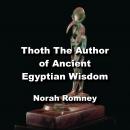
Thoth The Author of Ancient Egyptian Wisdom: Exploring The Life and Teachings of Thoth The Atlantean
"Thoth's roles in Egyptian mythology were many. He served as scribe of the gods, credited with the invention of writing and Egyptian hieroglyphs. In the underworld, Duat, he appeared as an ape, Aani, the god of equilibrium, who reported when the scales weighing the deceased's heart against the feather, representing the principle of Maat, was exactly even. The ancient Egyptians regarded Thoth as One, self-begotten, and self-produced. He was the master of both physical and moral (i.e. divine) law, making proper use of Ma'at. He is credited with making the calculations for the establishment of the heavens, stars, Earth, and everything in them. The Egyptians credited him as the author of all works of science, religion, philosophy, and magic. The Greeks further declared him the inventor of astronomy, astrology, the science of numbers, mathematics, geometry, surveying, medicine, botany, theology, civilized government, the alphabet, reading, writing, and oratory. They further claimed he was the true author of every work of every branch of knowledge, human and divine."
Norah Romney (Author), Brian Boru, Ryan Moorhen (Narrator)
Audiobook
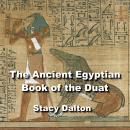
The Ancient Egyptian Book of the Duat: The Book of the Dead
"The objects found in the graves of the predynastic Egyptians, i.e., vessels of food, flint knives, and other weapons, etc., prove that these early dwellers in the Nile Valley believed in some kind of a future existence. However, as the art of writing was unknown to them, their graves contain no inscriptions, and we can only infer from texts of the dynastic Period what their ideas about the Other World were. They did not consider it of great importance to preserve the dead body in as complete and perfect state as possible, for in many of their graves, the heads, hands, and feet have been found severed from the trunks and lying at some distance from them. On the other hand, the dynastic Egyptians, either as the result of a difference in religious belief or under the influence of invaders who had settled in their country, attached supreme importance to the preservation and integrity of the dead body, and they adopted every means known to them to prevent its dismemberment and decay. They cleaned it and embalmed it with drugs, spices, and balsams; they anointed it with aromatic oils and preservative fluids; they swathed it in hundreds of yards of linen bandages; and then they sealed it up in a coffin or sarcophagus, which they laid in a chamber hewn in the bowels of the mountain."
Stacy Dalton (Author), Robbie Smith, Ryan Moorhen (Narrator)
Audiobook
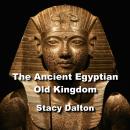
The Ancient Egyptian Old Kingdom: Exploring the Ancient Origins of The Egypts First Empire
"Most Egyptians were probably descended from settlers who moved to the Nile valley in prehistoric times, with population increase coming through natural fertility. In various periods there were immigrants from Nubia, Libya, and especially the Middle East. They were historically significant and also may have contributed to population growth, but their numbers are unknown. Most people lived in villages and towns in the Nile valley and delta. Nearly all of the people were engaged in agriculture and were probably tied to the land. In theory all the land belonged to the king, although in practice those living on it could not easily be removed and some categories of land could be bought and sold."
Stacy Dalton (Author), Christian Neale, Ryan Moorhen (Narrator)
Audiobook
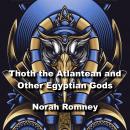
"Thoth, or Tehuti, was a highly composite deity. His birth was coeval with that of Ra. Let us enumerate his attributes before we seek to disentangle his significance. He is alluded to as the counter of the stars, the measurer and enumerator of the earth, as being twice great and thrice great lord of books, scribe of the gods, and as possessing knowledge of divine speech, in which he was 'mighty.' In general he was figured in human form with the head of an ibis, but sometimes he appears in the shape of that bird. He wears the crescent moon and disk upon his head, the Atef crown, and the crowns of the North and South. In the Book of the Dead, he is drawn as holding the writing reed and palette of the scribe and placing on his tablets the records of the deceased whose heart is being weighed before him. There is no reason to suppose that Thoth was totemic in character, as he belongs to the cosmogonic or nature deities, few or none of whom were of this type. Another form of Thoth is that of the dog-headed ape, which, it has been stated, symbolizes his powers of equilibrium. His principal seat of worship was Hermopolis, where Ra was supposed to have risen for the first time. To Thoth was ascribed the mental powers of Ra, and, indeed, the dicta of Ra seem to have come from his lips. He was the Divine Speech personified. Nevertheless, we are looking ahead. Let us discover his primitive significance before we enumerate the more or less complex attributes heaped upon him later."
Norah Romney (Author), Ryan Moorhen, Tom Kingsley (Narrator)
Audiobook
The Quest for Mars and the Search for a Second Earth
"Mars is of particular interest for the study of the origins of life because of its similarity to the early Earth. This is especially so since Mars has a cold climate and lacks plate tectonics or continental drift, so has remained almost unchanged since the end of the Hesperian period. NASA's Curiosity rover has found new evidence preserved in rocks on Mars that suggests that the planet could have supported ancient life. It has also found evidence for methane in the Martian atmosphere that could hold a clue for current life on the red planet. In 2018, scientists reported the discovery of a subglacial lake on Mars, 1.5 km (0.93 mi) below the southern polar ice cap, with a horizontal extent of about 20 km (12 mi), the first known stable body of liquid water on the planet. However, doing this for the entire planet may not be feasible. NASA conducted a feasibility study in 1976 that concluded it would take at least a few thousand years for even extremophile organisms specifically adapted for the Martian environment to make a habitable atmosphere out of the Red Planet."
Henry Romano (Author), Bill Shanks, Ryan Moorhen (Narrator)
Audiobook
©PTC International Ltd T/A LoveReading is registered in England. Company number: 10193437. VAT number: 270 4538 09. Registered address: 157 Shooters Hill, London, SE18 3HP.
Terms & Conditions | Privacy Policy | Disclaimer
Join our community for the latest bookish news, reading recommendations, exclusive opening extracts, author events and competitions. It\'s all free. And enter a monthly draw to win a £50 Gift Card. See past winners here
Join Our Community