Browse audiobooks narrated by David Zarbock, listen to samples and when you're ready head over to Audiobooks.com where you can get 3 FREE audiobooks on us
Jimmy Hoffa: The Controversial Life and Disappearance of the Godfather of the Teamsters
"A century ago, if one were to come across a manual laborer from the early 20th century or the Roaring Twenties and relayed to them the possibility of one day sticking it to The Man, one would probably be laughed out of the century. However, this was exactly what one man with solid-gold aspirations and audacity set out to achieve. Jimmy Hoffa, once described by Bobby Kennedy as the second most powerful man in America, was a union boss who evoked both respect and fear, and he continues to be a legendary figure who often crops up in conversation and media over 40 years after his disappearance. While it was an open secret that Hoffa had shady connections, the success of his leadership allowed supporters to overlook them. As Sloane put it, “More apparent to Teamster members than any moral lapses were the tangible gains that had been steadily realized under Hoffa since his advent to power.” Charles Brandt once wrote, “From 1955 until 1965 Jimmy Hoffa was as famous as Elvis Presley. From 1965 until 1975 Jimmy Hoffa was as famous as the Beatles.” But as famous as he was in life, it was Jimmy Hoffa’s demise that continues to fascinate the country. On July 30, 1975, Hoffa drove to an important meeting at the Machus Red Fox Restaurant, but he was never seen or heard from again. To this day, authorities are still searching for him (or presumably his remains), having been overloaded with false and dead-end leads throughout the decades. By championing the hearts and loyalty of America's trucking industry and arousing fear in the public for his rumored mob connections, earning a couple of enemies along the way was inevitable for Hoffa, but the mystery remains. Naturally, people have put forward ridiculous theories to explain his disappearance, but either way, it’s fair to say that the legendary life and times of the controversial and still-missing Teamster leader have produced one of the world's most baffling ongoing mysteries for good reason. Jimmy Hoffa: The Controversial Life and Disappearance of the Godfather of the Teamsters chronicles the tumultuous life of Jimmy Hoffa, one oozing with action and glory but also full of sinister entanglements with the criminal underworld. The book also looks at the enigma of his life and disappearance, exploring the most credible, fascinating, and downright nutty theories surrounding his persistently debated fate."
Charles River Editors (Author), David Zarbock (Narrator)
Audiobook
The Battle of Kursk: The History and Legacy of the Biggest Tank Battle of World War II
"The vast expanses of southern Russia and the Ukraine provided the Eastern Front arena where the armies of Third Reich dictator Adolf Hitler and Soviet dictator Josef Stalin wrestled lethally for supremacy in 1943. Endless rolling plains – ideal “tank country” – vast forests, sprawling cities, and enormous tracts of agricultural land formed the environment over which millions of men and thousands of the era's most formidable military vehicles fought for their respective overlords and ideologies. The winner could expect to reap very high stakes indeed. If Hitler's Wehrmacht smashed the Red Army, he could no longer hope for a lightning conquest, but the Fuhrer could expect the Soviet strongman to sue for peace on terms advantageous to Germany. If, conversely, the Red Army triumphed, Stalin could continue rallying the Soviet Union and move closer to expelling the loathed “Nemets” invaders from Russian soil – and perhaps carve out a Soviet empire in Central Europe. Asserting that changes in the military leadership style of the two contending dictators explains the outcome of Kursk oversimplifies the actual situation. Logistics, the emergence of a body of experienced junior officers in the Red Army, American Lend-Lease shipments, German production problems, and other issues all contributed to the observed result. However, the overarching factor tying everything together remained the changing approach of each leader to their army. At the start of the war, Hitler gave his commanders considerable initiative while Stalin fatally micromanaged his, and the Germans ripped vast hordes of Soviets to shreds with comparative ease. In late 1942 and moving into 1943, Hitler commenced micromanaging the Wehrmacht, and Stalin adopted a more “hands-off” approach permitting his commanders considerable initiative: “At the heart of the Red Army's lopsided tank losses was an amateurish and self-destructive style of decision imposed by Stalin […] In November 1942 there was a subtle shift in the Red Army, as months of military disasters finally caused Stalin to reduce some of his interference […] and allow quiet professionals such as Vasilevsky, Vatutin and Rokossovsky to prepare proper offensives.” (Forczyk, 2013, 257). Though the Wehrmacht remained too formidable and professional to collapse as readily as the appallingly low-quality Red Army had in 1941 and early 1942, the Red Army slowly got the upper hand and achieved strategic offensive momentum. That the shift occurred at the moment when Hitler hamstrung his generals with his melodramatic obstructionism while Stalin gave his some operational breathing room probably represents no accident. Kursk represented the transitional battle during which the Red Army first demonstrated its new capabilities. The Soviets possessed better commanders than at the start of the war, a numerous soldiery, good-quality equipment (in particular, the T-34 tank), and the beginnings of a professional officer corps. Nevertheless, it required personal, ham-handed intervention by Adolf Hitler to transform Kursk from a probable hard-won Wehrmacht victory into a marginal but highly significant defeat."
Charles River Editors (Author), David Zarbock (Narrator)
Audiobook
Area 51: The History and Mystery of America's Most Controversial Military Base
"Unlike many aspects of other conspiracy theories, Area 51 is a frequently-documented fact. UFO seekers can theorize to their heart’s content about what might have gone on there or whether Area 51 even exists, but Area 51 is quite real. In simple terms, it is a place where the United States government conducted—and continues to conduct—tests, in a remote environment where civilians are not in jeopardy and enemies from foreign countries cannot observe or sabotage weaponry or strategy the U.S. might use against them. Assuming that other countries were doing the same, the U.S. also used this remote site to test equipment like the U-2 that would make it possible to spy on other countries and for other countries to do harm to the United States. In civilian terms, it is merely a location on a map in a remote part of the Nevada desert, near the tiny hamlet of Rachel. The tiny little group of local residents is so small that one source notes that Rachel has never even been home to a post office. Area 51: The History and Mystery of America’s Most Controversial Military Base looks at the mysterious military base that has been the subject of countless conspiracy theories."
Charles River Editors (Author), David Zarbock (Narrator)
Audiobook
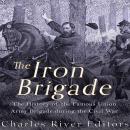
The Iron Brigade: The History of the Famous Union Army Brigade During the Civil War
"The title of “Iron Brigade” has been given to a number of different U.S. Army brigades over the last century and a half, but it has become almost entirely synonymous with the Civil War soldiers who fought in the brigade for the Army of the Potomac. Also known as the “Iron Brigade of the West,” “Rufus King’s Brigade” and the “Black Hat Brigade,” the Iron Brigade was comprised of the 2nd, 6th, and 7th Wisconsin Volunteer Infantry Regiments, the 19th Indiana, Battery B of the 4th U.S. Light Artillery, and later, the 24th Michigan. Wisconsin governor Alexander William Randall had hoped to organize an all-Wisconsin brigade to contribute to the Union’s Civil War effort, but the U.S. Army dispersed Wisconsin regiments to different areas as needs arose. Nevertheless, Wisconsin regiments comprised a majority of the brigade, and it would distinguish itself as the only all-Western brigade in the Army of the Potomac. It would come to be recognized for its unique uniforms, strong discipline, and “iron” disposition, earning the name during the Maryland Campaign both for its tenacity and for the costs paid by fighting so hard. Naturally, historians have focused on the battles where the Iron Brigade earned its name and demonstrated its reputation. Renowned Civil War historian Alan T. Nolan wrote and published the most complete military history of the Iron Brigade in 1961, tracing the brigade’s activity in the Civil War from the first mustering of Wisconsin regiments to the battle of Gettysburg. Nolan’s The Iron Brigade: A Military History served as the authority on Iron Brigade history for decades and called Gettysburg the Iron Brigade’s “last stand,” arguing that the battle was where the brigade lost its Western character. Since the publication of Nolan’s book in 1961, however, new sources—including letters and journals of men in the brigade—have been discovered, providing new depth to the history of the Iron Brigade. Thus, scholars in more recent years have contributed to the history of the Iron Brigade by focusing on the character and contributions of different regiments within the Iron Brigade, or by picking up where Nolan left off at the Battle of Gettysburg. Historians like Lance J. Herdegen argue that there is much more to be learned about the Iron Brigade by examining its struggle in the years after Gettysburg. In The Iron Brigade in Civil War and Memory: The Black Hats from Bull Run to Appomattox and Thereafter (2012), Herdegen provides a deeper account not only of the remnants of the Iron Brigade in the last two years of the Civil War, but also of its individual soldiers during and after the war. Exploring the experiences of members of the Iron Brigade before, during and after the Civil War contributes to a better understanding of their rise to fame and glory, and the cost of their sacrifice. The Iron Brigade: The History of the Famous Union Army Brigade During the Civil War traces the development of the Iron Brigade in the early years of the Civil War, examining the battles that fostered its reputation as one of the best combat infantry brigades in the Union army. In addition, this book looks at what the later years of the war and thereafter meant to Black Hat veterans, and what made men from the western frontier want to fight in a war far from home."
Charles River Editors (Author), David Zarbock (Narrator)
Audiobook
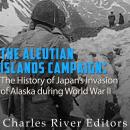
The Aleutian Islands Campaign: The History of Japan's Invasion of Alaska during World War II
"Fought over bitterly cold flecks of rock and tundra scattered across the remote waters marking the boundary between the Bering Sea and the Pacific Ocean, the Aleutian Islands campaign represented one of the strangest encounters of World War II. Curving southwestward from the southwest coast of Alaska like the tail of a stingray, the rugged, volcanic Aleutians belong to both the United States and Russia. The westernmost island, Attu, lies much closer to Russia's Kamchatka Peninsula than to Alaska; the distance to Anchorage, Alaska measures approximately 2,000 miles. The moral impact of the Doolittle Raid in response to Pearl Harbor far outweighed the relatively minor material damage it inflicted; Japan lost face and the faith of its people in ultimate victory declined sharply. Americans responded with delight and a fresh upsurge of hope. Despite interrogating the eight American aircrew they captured (and butchering tens of thousands of Chinese civilians in reprisal for assisting the rest in their escape), the Japanese leadership remained divided in their opinions about the bombers' origin. Many believed that the Americans had indeed devised a method of launching such large aircraft from an ordinary aircraft carrier. Many others, however, insisted the B-25s came from a land base, and only the Aleutians lay within a medium bomber's operational range. In any case, Admiral Yamamoto Isoroku planned a move against Midway. Attacking the Aleutians provided an excellent diversion, in his opinion, permitting him time to take Midway and organize land-based strike aircraft there. He could then take his carriers to annihilate America's Pacific Fleet, caught between the Aleutian Islands and Midway. Due to the belief that the Aleutian Islands might support the airfields from which the Doolittle bombers launched, Navy Order Eighteen from Imperial general HQ included a section decreeing “the invasion and occupation of the western Aleutians... in order to prevent enemy forces from attacking the homeland” (Garfield, 1978, 7). In the event, the secondary operation to the Aleutian Islands proved more successful than the main thrust at Midway Island. In a triumph of cryptanalytic skill and poker-player daring, codebreaker Joseph Rochefort and his team at “Hypo” cracked Japanese messages proving the main effort aimed at Midway. The U.S. Navy intercepted Yamamoto's fleet at Midway and smashed its carriers in one of the most decisive actions of the Pacific Theater on June 3rd to 7th, 1942. The Aleutians invasion, on the other hand, gave Japan a foothold on American territory that required almost a year to dislodge. In the end, however, by one of the ironies of war, the Japanese attempt to prevent land-based bombers from striking at Japan from the Aleutians backfired. Once the U.S. Army finally evicted the IJA from the islands, the Americans built considerably larger airfields there, from which regular sorties struck the Japanese-held Kurile Islands and shipping along the northern Japanese coast. The Aleutian Islands Campaign: The History of Japan’s Invasion of Alaska during World War II chronicles one of the most famous and unique campaigns in the Pacific."
Charles River Editors (Author), David Zarbock (Narrator)
Audiobook
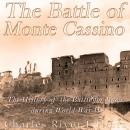
The Battle of Monte Cassino: The History of the Battle for Rome during World War II
"Germany's North African defeat opened up the possibility of taking the war in the west to the European continent for the first time since France's lightning conquest by the Wehrmacht in 1940. The British and Americans debated the merits of landing in France directly in 1943, but they ultimately opted against it. The Soviets railed at the Westerners as “bastards of allies” – conveniently forgetting that they aided and abetted Hitler's violent expansionism in eastern Europe for over a year starting in 1939 – but a 1943 “D-Day” style landing in France might have proven a strategic and logistical impossibility anyway. Thus, in 1943, the theater of Allied operations shifted from North Africa to Europe – Operation Husky, a mixed victory wresting control of Sicily from the Axis. The action also caused Benito Mussolini's downfall, his imprisonment, and subsequent dramatic rescue by the scar-faced Otto Skorzeny – removing significant portions of Italy from the fascist camp, but nevertheless failing to prevent a long Italian campaign. In fact, the lackluster Allied showing on Sicily and the escape of most of the island's garrison encouraged Hitler to alter his plans and defend Italy vigorously. With its rugged mountain ridges, deep valleys, and numerous rivers, Italy contained tens of thousands of natural defensive positions. The Wehrmacht exploited these to the full during the ensuing campaign, bogging down the Anglo-American armies in an endless series of costly, time-consuming engagements. Even the rank and file German soldiers showed a clear awareness of the Italy's strategic significance: “’The Tommies will have to chew their way through us inch by inch,’ a German paratrooper wrote in an unfinished letter found on his corpse at Salerno, ‘and we will surely make hard chewing for them.’” (Hastings, 2011, 408). Indeed, it was a tough slog, and few places were tougher on the Allies than Monte Cassino, which witnessed a series of Allied attacks along the German line that aimed to create a breakthrough to Rome. Ultimately, the attacks would force the Germans into retreat, but not before they had inflicted over 50,000 casualties at a cost of about 20,000 of their own. The battle is perhaps best remembered today for the destruction of a historic abbey that dated back to the 6th century, and the controversial decision to bomb it is still widely debated today, but regardless, Monte Cassino and other operations around Anzio made it possible for the Allies to take Rome on June 4, 1944. 2 days later, the Allies would land at Normandy. The Battle of Monte Cassino: The History of the Battle for Rome during World War II chronicles the crucial 1944 battle."
Charles River Editors (Author), David Zarbock (Narrator)
Audiobook
The Weird West Coast: Monsters, Mysteries, and Madmen on the Pacific Rim
"On the East Coast, people try to make life interesting. On the West Coast, they try to make it comfortable. The emphasis here is on fancy cars, how one looks, less on the mind per se.” – Al Seckel The West Coast of the United States has always been a center of mystery. Native American legends, tantalizing traces of Chinese visits in the Middle Ages, lost gold mines, and supernatural visitations are only some of the phenomena in a region rich with stories of the unknown. The Weird West Coast: Monsters, Mysteries, and Madmen on the Pacific Rim is part of an ongoing series by Sean McLachlan and Charles River Editors that includes The Weird Wild West, Mysteries of the South, The Mysterious Midwest, and Mysterious New England, and more regional titles will be coming soon. This book offers a sampling of strange, unexplained, and just plain odd stories of the West Coast that have fascinated people in and around the region for centuries."
Charles River Editors, Sean McLachlan (Author), David Zarbock (Narrator)
Audiobook
Legends of the West: Deadwood, South Dakota
"Space may be the final frontier, but no frontier has ever captured the American imagination like the “Wild West”, which still evokes images of dusty cowboys, outlaws, gunfights, gamblers, and barroom brawls over 100 years after the West was settled. A constant fixture in American pop culture, the 19th century American West continues to be vividly and colorful portrayed not just as a place but as a state of mind. In Charles River Editors’ Legends of the West series, readers can get caught up to speed on the lives of America’s most famous frontier figures in the time it takes to finish a commute, while learning interesting facts long forgotten or never known. The Wild West has made legends out of many men, but it also forged a lasting legacy for a few of the West’s most legendary towns, and alongside the city of Tombstone, Arizona, perhaps the most famous of them was Deadwood in the Black Hills of South Dakota. Deadwood owes its notoriety to some of the colorful people who called it home, and a recent critically acclaimed television series about the town that brought it to life for millions of modern viewers. In many ways, Deadwood fit all the stereotypes associated with the Old West. A mining town that sprung up quickly, it was a dusty place on the outskirts of civilization that brought together miners, cowboys, lawmen, saloons, gambling, brothels, and everything in between, creating an environment that was always colorful and occasionally fatal. In fact, Deadwood should have never legally existed. In 1874, General George Armstrong Custer led a troop over of 1,000 men to investigate reports of the discovery of gold on Lakota-Sioux land in the Black Hills. Sioux ownership of the land stemmed from the Treaty of Laramie in 1868, but the discovery of gold changed things for the United States. The mining town of Deadwood quickly sprung up as prospectors descended on the area, even though the federal government had ordered military troops to set up posts there to keep prospectors out. These characteristics might not have distinguished Deadwood from other frontier outposts that dotted the landscape, but some of the West’s most famous legends of the West called Deadwood home. Men like Al Swearengen and Charlie Utter came to make fortunes one way or another, Calamity Jane amused and irritated the townspeople in equal measure, and the legendary Wild Bill Hickok was shot and killed in one of Deadwood’s saloons while holding the “Dead Man’s Hand” by “the coward McCall.” Wild Bill’s death helped ensure Deadwood would be remembered as an important part of Western lore, but in many ways the Deadwood craze was over almost before it began. During the 19th century, Deadwood’s population reached its peak in the 1880s with a population of just less than 4,000, and fires, mining, and the closing of the frontier all made sure the population never grew. Today, barely 1,000 call Deadwood home, and it remains more an object of curiosity and tourism than anything else. Legends of the West: Deadwood, South Dakota comprehensively covers the history of the city, profiles the people who called it home, and highlights the attractions and events that made it famous."
Charles River Editors (Author), David Zarbock (Narrator)
Audiobook
Buddy Baker: Big Band Arranger, Disney Legend, and Musical Genius
"Buddy Baker was Disney music. Mostly known as the composer of the Haunted Mansion song and score, he was also a composer of films (Wicked Woman, The Fox and the Hound), television shows (the original Mickey Mouse Club), and numerous theme park attractions (World of Motion, Wonders of China, Kitchen Kaberet, Impressions de France) around the globe. From a humble beginning in Springfield, Missouri, Buddy Baker began composing and arranging music at an early age. He worked for many of the top big bands, then began arranging music on hit radio shows (the Bob Hope show, the Eddie Cantor show, the Jack Benny program) before getting into film. His thirty-plus-year career with the Walt Disney Company put him at the top of his field, working alongside many of the greats, including Walt Disney himself. This is Buddy’s story—not a book on Disney music, but a tribute to one of the greatest musical minds the world has ever known. His music will play on forever."
Ben Ohmart (Author), David Zarbock (Narrator)
Audiobook

Brooke & the Amazing Discovery
"Brooke’s adventures on the Magical Murphy Farm continue when she stumbles upon a secret that could change everything. With the help of her fairy friends and a mysterious dragon prince, she uncovers a hidden part of Lismore Baile — a realm where magic and nature live in harmony. But when a powerful force threatens the balance of the enchanted farm, Brooke must summon her courage and creativity to protect the place she loves. Can one girl and a few fairies save a magical world? Full of wonder, friendship, and heart, Brooke & the Fairy Amazing Discovery is a delightful tale that will spark young imaginations and leave listeners dreaming of their own magical adventures."
Patricia Arnold (Author), David Zarbock (Narrator)
Audiobook
Brooke & the Fairy Happy Birthday
"It’s Brooke’s birthday — and she’s about to receive the most magical surprise of all! When her fairy friends invite her to a secret celebration in Lismore Baile, Brooke embarks on a birthday adventure filled with sparkling lights, enchanted gifts, and a few unexpected guests. But when a magical mishap threatens to ruin the party, Brooke must use her kindness and clever thinking to save the day. Along the way, she learns that the best gifts aren’t wrapped in ribbons — they’re shared from the heart. A joyful tale of celebration, friendship, and fairy magic, Brooke & the Fairy Happy Birthday is a perfect listen for young dreamers — especially on their special day."
Patricia Arnold (Author), David Zarbock (Narrator)
Audiobook
Brooke & the Fairy Merry Christmas
"It’s Christmas Eve on the Magical Murphy Farm, and Brooke is bursting with excitement — until she learns that something is terribly wrong at the North Pole. Jack Frost is missing, Santa’s sleigh is grounded, and Christmas magic is fading fast. With the help of her fairy friends, a dazzling Ice Queen, and a fire-breathing volcano dragon named Fireglide, Brooke embarks on a snowy quest to save the season. Along the way, she discovers that even the smallest acts of kindness can melt the coldest hearts. A festive tale of courage, teamwork, and holiday wonder, Brooke & the Fairy Merry Christmas is a magical listen the whole family will treasure year after year."
Patricia Arnold (Author), David Zarbock (Narrator)
Audiobook
©PTC International Ltd T/A LoveReading is registered in England. Company number: 10193437. VAT number: 270 4538 09. Registered address: 157 Shooters Hill, London, SE18 3HP.
Terms & Conditions | Privacy Policy | Disclaimer
Join our community for the latest bookish news, reading recommendations, exclusive opening extracts, author events and competitions. It\'s all free. And enter a monthly draw to win a £50 Gift Card. See past winners here
Join Our Community