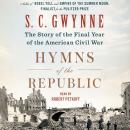
"From the New York Times bestselling and award-winning author of Empire of the Summer Moon and Rebel Yell comes "a masterwork of history" (Lawrence Wright, author of God Save Texas), the spellbinding, epic account of the last year of the Civil War.
The fourth and final year of the Civil War offers one of the most compelling narratives and one of history's great turning points. Now, Pulitzer Prize finalist S.C. Gwynne breathes new life into the epic battle between Robert E. Lee and Ulysses S. Grant; the advent of 180,000 black soldiers in the Union army; William Tecumseh Sherman's March to the Sea; the rise of Clara Barton; the election of 1864 (which Lincoln nearly lost); the wild and violent guerrilla war in Missouri; and the dramatic final events of the war, including Lee's surrender at Appomattox and the murder of Abraham Lincoln.
"A must-read for Civil War enthusiasts" (Publishers Weekly), Hymns of the Republic offers many surprising angles and insights. Robert E. Lee, known as a great general and Southern hero, is presented here as a man dealing with frustration, failure, and loss. Ulysses S. Grant is known for his prowess as a field commander, but in the final year of the war he largely fails at that. His most amazing accomplishments actually began the moment he stopped fighting. William Tecumseh Sherman, Gwynne argues, was a lousy general, but probably the single most brilliant man in the war. We also meet a different Clara Barton, one of the greatest and most compelling characters, who redefined the idea of medical care in wartime. And proper attention is paid to the role played by large numbers of black union soldiers—most of them former slaves.
Popular history at its best, Hymns of the Republic reveals the creation that arose from destruction in this "engrossing…riveting" (Kirkus Reviews, starred review) read."
"An "excellent sports history" (Publishers Weekly) in the tradition of Michael Lewis's Moneyball, award-winning historian S.C. Gwynne tells the incredible story of how two unknown coaches revolutionized American football at every level, from high school to the NFL.
Hal Mumme spent fourteen mostly losing seasons coaching football before inventing a potent passing offense that would soon shock players, delight fans, and terrify opposing coaches. It all began at a tiny, overlooked college called Iowa Wesleyan, where Mumme was head coach and Mike Leach, a lawyer who had never played college football, was hired as his offensive line coach. In the cornfields of Iowa these two mad inventors, drawn together by a shared disregard for conventionalism and a love for Jimmy Buffett, began to engineer the purest, most extreme passing game in the 145-year history of football. Implementing their "Air Raid" offense, their teams—at Iowa Wesleyan and later at Valdosta State and the University of Kentucky—played blazingly fast—faster than any team ever had before, and they routinely beat teams with far more talented athletes. And Mumme and Leach did it all without even a playbook.
"A superb treat for all gridiron fans" (Kirkus Reviews, starred review), The Perfect Pass S.C. Gwynne explores Mumme's leading role in changing football from a run-dominated sport to a pass-dominated one, the game that tens of millions of Americans now watch every fall weekend. Whether you're a casual or ravenous football fan, this is "a rousing tale of innovation" (Booklist), and "Gwynne's book ably relates the story of that innovation and the successes of the man who devised it" (New York Journal of Books)."