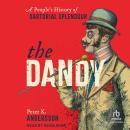
"The historical figure of the dandy has commonly been described as an upper-class gentleman. But there is a broader history to be told about the dandy—one that incorporates unknown men from the lower strata of society.
The Dandy: A People's History constitutes the first history of those dandies who emanated from the less privileged layers of the populace—the lowly clerks, shop assistants, domestic servants, and laborers who increasingly during the modern age have emerged as style-conscious men about town.
A series of fascinating in-depth studies of the wide variety of dandy subcultures that have surfaced around the world in the last two centuries tell the story of how the shaping of fashions and the image of men became increasingly democratized, with the arbiters of taste increasingly coming from the other end of the social spectrum. We encounter such long-forgotten groups as the mashers, the knuts, the Paris gandins and the Berlin transgender dandies, alongside unexplored figures like the zoot suiter, the teddy boy, and the New Romantic.
This is a story of how fundamental aspects of modern culture such as fashion, style, and conduct have been shaped from below just as much as from above."
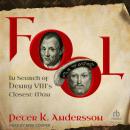
"In some portraits of Henry VIII there appears another figure—a gaunt and morose-looking man with a shaved head. This is William or 'Will' Somer, the king's fool, a celebrated wit who reportedly could raise Henry's spirits and spent many hours with him. Was Somer an 'artificial fool,' a cunning comic who could speak freely in front of the king, or a 'natural fool,' someone with intellectual disabilities, like many other members of the profession? Fool is the first biography of Somer—and perhaps the first of a Renaissance fool.
After his death, Somer disappeared, and historians struggled to separate myth from reality. Unearthing as many facts as possible, Peter K. Andersson pieces together the fullest picture yet of an enigmatic and unusual man with a strange job. Somer's story provides new insights into how fools lived and what they did for a living, how monarchs and courtiers related to commoners and people with disabilities, and whether aspects of the Renaissance fool live on in the modern comedian. But most of all, we learn how a commoner without property or education managed to become the court's chief mascot and a continuous presence at the center of Tudor power.
Fool reveals a little-known world, surprising and disturbing, when comedy was something crueler and more unpleasant than we like to think."
Join our community for the latest bookish news, reading recommendations, exclusive opening extracts, author events and competitions. It\'s all free. And enter a monthly draw to win a £50 Gift Card. See past winners here