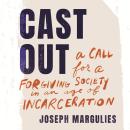
"'There is no them, there is only us.'
"Margulies tells the stories of people who have done monstrous things but are not monsters, are not forever defined by their worst acts. He writes beautifully of pain and loss, but also of redemption and transformation….A wonderfully hopeful book about what it means to be human."-Sister Helen Prejean, author of Dead Man Walking
In Cast Out, civil rights lawyer Joseph Margulies insists that those who commit even the most heinous crimes are one of us and should be judged in a spirit of forgiveness. He explains that American society is too often unforgiving, preferring to cast out those we consider irredeemable by fixating narrowly on the question, "What did they do?", and imagining that those who have done great wrongs have no past worth learning and no future worth preserving.
But judgment in a forgiving spirit demands that we ask, "What happened?" What brought a human being to this place. Through intimate interviews, his rich chapters bring to life six men and women, sharing their (sometimes brutal) crimes, the grim but all-too-human paths that led them there, and their evolution and insights.
Eye-opening and unflinching, Cast Out makes us truly see those society locks away-the so-called "worst of the worst". It challenges the reader to see us in them and them in us, and in that way, to recognize the humanity we all share."
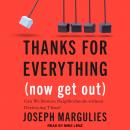
"When a distressed urban neighborhood gentrifies, all the ratios change: poor to rich; Black and Brown to white; unskilled to professional; vulnerable to secure. Vacant lots and toxic dumps become condos and parks. Upscale restaurants open and pawn shops close. But the low-income residents who held on when the neighborhood was at its worst, who worked so hard to make it better, are gradually driven out. For them, the neighborhood hasn’t been restored so much as destroyed.
Tracing the history of Olneyville, a neighborhood in Providence, Rhode Island, that has traveled the long arc from urban decay to the cusp of gentrification, Joseph Margulies asks the most important question facing cities today: Can we restore distressed neighborhoods without setting the stage for their destruction? Is failure the inevitable cost of success? Based on years of interviews and on-the-ground observation, Margulies argues that to save Olneyville and thousands of neighborhoods like it, we need to empower low-income residents by giving them ownership and control of neighborhood assets. His model for a new form of neighborhood organization—the 'neighborhood trust'—is already gaining traction nationwide and promises to give the poor what they have never had in this country: the power to control their future."
Join our community for the latest bookish news, reading recommendations, exclusive opening extracts, author events and competitions. It\'s all free. And enter a monthly draw to win a £50 Gift Card. See past winners here