Browse audiobooks by Euripides, listen to samples and when you're ready head over to Audiobooks.com where you can get 3 FREE audiobooks on us
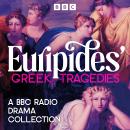
"A selection of Euripides’ renowned Greek tragedies, adapted for BBC Radio Acclaimed by Aristotle as ‘the most tragic of the poets’, Euripides was one of the pre-eminent playwrights of 5th century Athens. Included here are seven of his masterpieces: powerful, shocking tales of passion, suffering and revenge that still resonate with us today. Among the star casts are Maxine Peake, Richard Dormer, Roger Allam, Olympia Dukakis, Christine Bottomley, Timothy West, Siân Phillips, Emma Fielding and Anton Lesser. The Women of Troy – Troy has fallen. The great city is destroyed, its men slaughtered and its women held captive: among them, Hecuba and her daughters... In Linda Marshall Griffith’s contemporary reimagining of Euripides’ compelling anti-war play, journalist Sappho leads a chorus of women as they record and broadcast their testimonies on social media for the world to witness. Iph... – Colin Teevan’s forceful, vigorous version of Iphigeneia at Aulis sees the Greek leader Agamemnon facing a horrifying choice. With the Greek fleet becalmed at Aulis, should he sacrifice Iphigeneia to the gods for a fair wind to Troy, or save his beloved daughter at the cost of his honour? Alcestis – When the gods insist that King Admetos must die, his devoted wife Alcestis offers herself in his place and goes to the grave in his stead. Can the hero Heracles rescue her from Death’s clutches? Hecuba – Having watched the rape and pillage of Troy, the widowed, enslaved Trojan queen learns that her daughter is to be sacrificed to the spirit of Achilles, and her youngest son has been murdered by the man who was meant to protect him. Grief-stricken, she vows to take vengeance… An elegant, fierce rendering by Timberlake Wertenbaker of Euripides’ controversial classic. Hippolytus – Angered that Theseus’ illegitimate son refuses to worship her, the goddess Aphrodite swears revenge. Using her divine power, she causes Theseus’ wife Phaedra to fall desperately in love with Hippolytus – and condemns them both to death… The ‘Ion’ of Euripides – Young temple slave Ion has grown up believing himself an orphan. When he meets Queen Kreousa, who was raped by Apollo and forced to give up the resulting child, he discovers his true parentage – but is he destined to die at the hands of his mother? The Medea of Euripides – Abandoned by her faithless husband, Jason, the vengeful sorceress Medea determines to punish him. Driven by ruthless, cold-blooded rage, she plots to kill his new bride – and murder her own children... NB: Contains strong language The Women of Troy Iph... Alcestis Hecuba Hippolytus The ‘Ion’ of Euripides The Medea of Euripides © 2026 BBC Studios Distribution Ltd. (P) 2026 BBC Studios Distribution Ltd"
Euripides (Author), Anton Lesser, Christine Bottomley, Emma Fielding, Full Cast, Maxine Peake, Richard Dormer, Roger Allam, Sian Philips, Timothy West (Narrator)
Audiobook
"Diese Hörbuch-Edition vereint zentrale Werke des antiken griechischen Theaters – Texte, in denen sich die Grundfragen menschlicher Existenz erstmals in dramatischer Form verdichten: Schuld und Verantwortung, Macht und Moral, Liebe und Gewalt, Individuum und Gemeinschaft. Entstanden im Athen des 5. Jahrhunderts v. Chr., treten Tragödie und Komödie hier in einen spannungsreichen Dialog. Mit Die Perser eröffnet Aischylos das politische Drama Europas. Als einzigartiges Zeitstück zeigt die Tragödie die Niederlage der Perser aus der Perspektive der Besiegten – ein frühes, eindringliches Zeugnis von Mitgefühl und historischer Reflexion. Im Zentrum der Sammlung steht die komplette Orestie (Agamemnon, Die Choephoren, Die Eumeniden), Aischylos' monumentale Trilogie über Schuld, Rache und die Geburt des Rechts. Sie markiert den Übergang von archaischer Vergeltung zu einer geordneten menschlichen Rechtsprechung und bildet das Fundament des abendländischen Dramas. Mit Antigone und König Ödipus führt Sophokles das Drama auf die Ebene des Individuums. Antigones Gewissenskonflikt und Ödipus' schmerzhafte Selbsterkenntnis gehören zu den eindringlichsten Darstellungen menschlicher Verantwortung, Schuld und Wahrheitssuche in der Literaturgeschichte. Mit Medea tritt schließlich Euripides hinzu – der radikalste und modernste der Tragiker. Seine Medea ist keine mythische Figur mehr, sondern eine verletzte, leidenschaftliche, gefährlich klare Frau. Euripides zeigt die zerstörerische Kraft von Ausgrenzung, Verrat und verletzter Liebe und führt das antike Drama an die Grenzen des psychologisch Erträglichen. Einen bewussten Gegenpol bilden Die Vögel und Lysistrate von Aristophanes. Mit Satire, Fantasie und politischem Witz kommentieren sie Krieg, Macht und menschliche Torheiten – und zeigen, dass das antike Theater immer auch Raum für Kritik, Utopie und befreiendes Lachen war. Diese Hörbuch-Compilation macht das klassische griechische Drama in seiner ganzen Spannweite erlebbar: vom sakralen Ursprungsmythos über die große Tragödie des Individuums bis zur provokanten psychologischen Moderne und zur politischen Komödie. Ein literarisches Fundament Europas – zeitlos, erschütternd und von ungebrochener Aktualität."
Aischylos, Aristophanes, Euripides, Sophokles (Author), Jürgen Fritsche, Sven Görtz (Narrator)
Audiobook
"This audiobook is narrated by a digital voice. Euripides, one of the three great Greek tragedians was born in Attica probably in 485 B.C. of well-to-do parents. In his youth he cultivated gymnastic pursuits and studied philosophy and rhetoric. Soon after he received recognition for a play that he had written, Euripides left Athens for the court of Archelaus, king of Macedonia. In his tragedies, Euripides represented individuals not as they ought to be but as they are. His excellence lies in the tenderness and pathos with which he invested many of his characters. Euripides' attitude toward the gods was iconoclastic and rationalistic; toward humans-notably his passionate female characters-his attitude was deeply sympathetic. In his dramas, Euripides separated the chorus from the action, which was the first step toward the complete elimination of the chorus. He used the prologue as an introduction and explanation. Although Euripides has been charged with intemperate use of the deus ex machina, by which artifice a god is dragged in abruptly at the end to resolve a situation beyond human powers, he created some of the most unforgettable psychological portraits. Fragments of about fifty-five plays survive; some were discovered as recently as 1906. Among his best-known plays are Alcestis (438 B.C.), Medea and Philoctetes (431 B.C.), Electra (417 B.C.), Iphigenia in Tauris (413 B.C.), The Trojan Women (415 B.C.), and Iphigenia in Aulis Iphigenia (c.405 B.C.). Euripides died in Athens in 406. Shortly after his death his reputation rose and has never diminished."
Euripides (Author), Digital Voice Martin G (Narrator)
Audiobook
"This audiobook is narrated by a digital voice. In this volume of Euripides tragedies you will find the pays Hecuba, Orestes, The Phúnician Virgins, Medea, Hippolytus, Alcestis, The Bacchae, The Heracleidae, Iphigenia in Aulis, and Iphigenia in Tauris."
Euripides (Author), Digital Voice Martin G (Narrator)
Audiobook
"This audiobook is narrated by a digital voice. The theme of the Heraclidae is how the children of Heracles, under the care of Lolaus and Alemena, were driven from city to city throughout Greece, fleeing the wrath of Eurystheus, king of Argos, who hated them for their father's sake."
Euripides (Author), Digital Voice Martin G (Narrator)
Audiobook
[German] - Medea. Eine griechische Tragödie.: Hörbuchzeit: Klassiker der Weltliteratur
"Ein erschütterndes Drama über Verrat, Rache und menschliche Abgründe – ungekürzt gesprochen von Sven Görtz. Über das Hörbuch: Mit 'Medea' schuf Euripides eines der eindrucksvollsten Dramen der griechischen Antike. Im Mittelpunkt steht Medea, die von ihrem Mann Jason für eine andere verlassen wird – und deren Reaktion in eine der radikalsten Taten der Tragödienliteratur mündet. Die Tragödie thematisiert Liebe, Rache, Machtlosigkeit und die Stellung der Frau – und zeigt, wie Schmerz, Stolz und Ausgrenzung einen Menschen zu tragischen Entscheidungen bewegen können. Ein weltberühmter Stoff – Medeas Geschichte wird bis heute auf den Bühnen der Welt gespielt und diskutiert. Ein Klassiker der Weltliteratur – intensiv, packend und zeitlos erschütternd. Warum dieses Hörbuch? - Eine der bekanntesten Tragödien der Antike - Thema: Rache, Verrat & das dramatische Ringen einer Figur zwischen Schmerz, Stolz und seelischer Entfremdung - Ungekürzte Lesung von Sven Görtz – ruhig, ausdrucksstark & literarisch präzise interpretiert - Ideal für Hörer klassischer Dramatik & antiker Stoffe Jetzt als ungekürztes Hörbuch – dramatisch, sprachgewaltig & zeitlos aktuell. Gesprochen von: Sven Görtz (P)2020 BÄNG Management & Verlags GmbH & Co. KG"
Euripides, Hörbuchzeit (Author), Sven Görtz (Narrator)
Audiobook
"This audiobook is narrated by a digital voice. The theme of the Heraclidae is how the children of Heracles, under the care of Iolaus and Alemena, were driven from city to city throughout Greece, fleeing the wrath of Eurystheus, king of Argos, who hated them for their father's sake."
Euripides (Author), Digital Voice Martin G (Narrator)
Audiobook
"This audiobook is narrated by a digital voice. The theme of the Heraclidae is how the children of Heracles, under the care of Iolaus and Alemena, were driven from city to city throughout Greece, fleeing the wrath of Eurystheus, king of Argos, who hated them for their father's sake."
Euripides (Author), Digital Voice Martin G (Narrator)
Audiobook
"This audiobook is narrated by a digital voice. Euripides, one of the three great Greek tragedians was born in Attica probably in 485 B.C. of well-to-do parents. In his youth he cultivated gymnastic pursuits and studied philosophy and rhetoric. Soon after he received recognition for a play that he had written, Euripides left Athens for the court of Archelaus, king of Macedonia. In his tragedies, Euripides represented individuals not as they ought to be but as they are. His excellence lies in the tenderness and pathos with which he invested many of his characters. Euripides' attitude toward the gods was iconoclastic and rationalistic; toward humans-notably his passionate female characters-his attitude was deeply sympathetic. In his dramas, Euripides separated the chorus from the action, which was the first step toward the complete elimination of the chorus. He used the prologue as an introduction and explanation. Although Euripides has been charged with intemperate use of the deus ex machina, by which artifice a god is dragged in abruptly at the end to resolve a situation beyond human powers, he created some of the most unforgettable psychological portraits. Fragments of about fifty-five plays survive; some were discovered as recently as 1906. Among his best-known plays are Alcestis (438 B.C.), Medea and Philoctetes (431 B.C.), Electra (417 B.C.), Iphigenia in Tauris (413 B.C.), The Trojan Women (415 B.C.), and Iphigenia in Aulis Iphigenia (c.405 B.C.). Euripides died in Athens in 406. Shortly after his death his reputation rose and has never diminished."
Euripides (Author), Digital Voice Martin G (Narrator)
Audiobook
"This audiobook is narrated by a digital voice. In this volume of Euripides tragedies you will find the pays Hecuba, Orestes, The Phúnician Virgins, Medea, Hippolytus, Alcestis, The Bacchae, The Heracleidae, Iphigenia in Aulis, and Iphigenia in Tauris."
Euripides (Author), Digital Voice Martin G (Narrator)
Audiobook
"This audiobook is narrated by a digital voice. 'The Alcestis would hardly confirm its author's right to be acclaimed 'the most tragic of the poets.' It is doubtful whether one can call it a tragedy at all. Yet it remains one of the most characteristic and delightful of Euripidean dramas, as well as, by modern standards, the most easily actable. And I notice that many judges who display nothing but a fierce satisfaction in sending other plays of that author to the block or the treadmill, show a certain human weakness in sentencing the gentle daughter of Pelias.' So begins the introduction to the Alcestis by Euripides."
Euripides (Author), Digital Voice Martin G (Narrator)
Audiobook
"This audiobook is narrated by a digital voice. 'The Alcestis would hardly confirm its author's right to be acclaimed 'the most tragic of the poets.' It is doubtful whether one can call it a tragedy at all. Yet it remains one of the most characteristic and delightful of Euripidean dramas, as well as, by modern standards, the most easily actable. And I notice that many judges who display nothing but a fierce satisfaction in sending other plays of that author to the block or the treadmill, show a certain human weakness in sentencing the gentle daughter of Pelias.' So begins the introduction to the Alcestis by Euripides."
Euripides (Author), Digital Voice Martin G (Narrator)
Audiobook
©PTC International Ltd T/A LoveReading is registered in England. Company number: 10193437. VAT number: 270 4538 09. Registered address: 157 Shooters Hill, London, SE18 3HP.
Terms & Conditions | Privacy Policy | Disclaimer
Join our community for the latest bookish news, reading recommendations, exclusive opening extracts, author events and competitions. It\'s all free. And enter a monthly draw to win a £50 Gift Card. See past winners here
Join Our Community