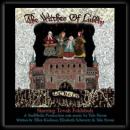
The Witches of Lublin
"They say the Devil came to Lublin, Poland once, in the early spring of the year 1797 of the Christian calendar. For the Jews of Lublin, it was the month of Nisan in the year 5557.
There are two calendars, because there are two Lublins: the Lublin of the Polish Catholics, who fear only God, the Devil, and their local nobleman, Count Sobieski and the Lublin of the Jews, who fear everyone and everything, and with good reason. For despite having lived in Poland for hundreds of years, the Jews live every day in Lublin only by the grace of the Count's uncertain tolerance.
In The Witches of Lublin, as the Jewish holiday of Passover nears, with it hangs the threat of violence. Violence, that the Jewish community has seen before, in Lublin, and all over Eastern Europe. Suddenly, come soldiers with orders of eviction, followed by a gang of angry peasants with torches - a pogrom - to pillage, rape or kill any Jews who doesn't get out fast enough. The Jews of Poland have plenty to worry about in 1797.
Graf Sobieski rules all of Lublin, but within Lublin's Jewish community, there is a social hierarchy - perhaps successful businessmen like the butcher (and the butcher's wife) wield the most power, but it is the Rabbi who is the community's spiritual leader.
A poor, unmarried woman with barely two groshn to rub together,
two unmarried daughters, and an orphaned granddaughter to support, would barely cling to the bottom rung of the social ladder. Unless that woman were Rivke. Widowed, poor and struggling, yes, but Rivke is no ordinary woman.
Daughter of the great Jewish mystic Reb Leyb Sora, Rivke is sister to the rabbi's wife, a weaver of lace, a Talmud scholar, and an extraordinary musician. Rivke has struggled to maintain her little family under the most trying circumstances.
It is her insistence that her daughters Leah and Sorele play music (as well as the men - better, in fact) and that her granddaughter Sofiasing that leads to the family's downfall. The women's talents, intellect and spirituality only raise suspicious whispers in the Jewish community.
But when the women's reputation as the best klezmer musicians in Poland spreads beyond the ghetto's boundaries and the Count commands Rivke, her daughters and granddaughter perform at his son, Bogdan's, name day celebration, Rivke is faced with an impossible choice: Do as he commands and risk scandal, or refuse and risk the Count's revenge on the entire Jewish community - a pogrom.
No one could have anticipated the tragic love that heedlessly sows the seeds of disaster for Rivke and her daughters, that exiles Sophia from her people and that opens the very doors of heaven. But there is more to the legacy of Reb Leyb Sora than even those in the Jewish community could have anticipated, and as these witches reveal themselves to be holy women, they leave behind them a legend that cannot die.
The Witches of Lublin is based on true and little known history of klezmer musicians in Eastern Europe. Co-writer Yale Strom's research uncovered the facts that there were women klezmer musicians, and that when klezmers would play for gentile nobility, their reward could sometimes be beatings, death or even kidnappings. This history formed the springboard for this work of fiction by Strom, Schwartz and Kushner based on Jewish women's lives in 18th Century Europe, klezmer music and feminist history, with a healthy dose of magical realism thrown in."
Elizabeth Maul Schwartz, Ellen Kushner, Yale Strom (Author), A Full Cast (Narrator)
Audiobook