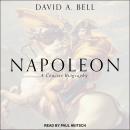
"The twentieth century is usually seen as 'the century of total war.' But as the historian David A. Bell argues in this landmark work, the phenomenon actually began much earlier, in the era of muskets, cannons, and sailing ships—in the age of Napoleon.
In a sweeping, evocative narrative, Bell takes us from campaigns of 'extermination' in the blood-soaked fields of western France to savage street fighting in ruined Spanish cities to central European battlefields where tens of thousands died in a single day. Between 1792 and 1815, Europe plunged into an abyss of destruction.
It was during this time, Bell argues, that our modern attitudes toward war were born. Ever since, the dream of perpetual peace and the nightmare of total war have been bound tightly together in the Western world—right down to the present day, in which the hopes for an 'end to history' after the cold war quickly gave way to renewed fears of full-scale slaughter.
With a historian's keen insight and a journalist's flair for detail, Bell exposes the surprising parallels between Napoleon's day and our own. The result is a book that is as timely and important as it is unforgettable."
"This book provides a concise, accurate, and lively portrait of Napoleon Bonaparte's character and career, situating him firmly in historical context.
David Bell emphasizes the astonishing sense of human possibility—for both good and ill—that Napoleon represented. By his late twenties, Napoleon was already one of the greatest generals in European history. At thirty, he had become absolute master of Europe's most powerful country. In his early forties, he ruled a European empire more powerful than any since Rome, fighting wars that changed the shape of the continent and brought death to millions. Then everything collapsed, leading him to spend his last years in miserable exile in the South Atlantic.
Bell emphasizes the importance of the French Revolution in understanding Napoleon's career. The revolution made possible the unprecedented concentration of political authority that Napoleon accrued, and his success in mobilizing human and material resources. Without the political changes brought about by the revolution, Napoleon could not have fought his wars. Without the wars, he could not have seized and held onto power. Though his virtual dictatorship betrayed the ideals of liberty and equality, his life and career were revolutionary."
Join our community for the latest bookish news, reading recommendations, exclusive opening extracts, author events and competitions. It\'s all free. And enter a monthly draw to win a £50 Gift Card. See past winners here