

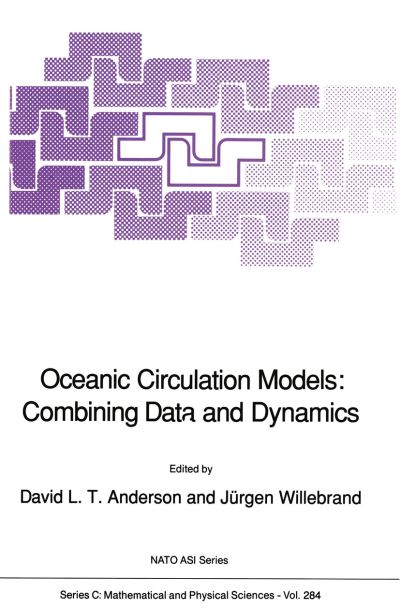
This book which is the outcome of a NATO-Advanced Study Institute on Mod- elling the Ocean Circulation and Geochemical Tracer Transport is concerned with using models to infer the ocean circulation. Understanding our climate is one of the major problems of the late twentieth century. The possible climatic changes resulting from the rise in atmospheric carbon dioxide and other trace gases are of primary interest and the ocean pla.
ys a ma. jor role in determining the magnitude, temporal evolution and regional distribution of those changes.
Because of the poor observational basis the ocean general circulation is not well understood. The World Ocean Circulation Experiment (WOCE) which is now underway is an attempt to improve our knowledge of ocean dynamics and thermodynamics on global scales relevant to climate change. Despite those efforts, the oceanic data base is likely to remain scarce and it is crucial to use appropriate methods in order to extract the maximum amount of information from observations.
The book contains a thorough analysis of methods to combine data of val'ious types with dynamical concepts, and to assimilate data directly into ocean models. The properties of geocl;temical tracers such as HC, He, Tritium and Freons and how they may be used to impose integral constraints on the ocean circulation are discussed.
| ISBN: | 9789401069465 |
| Publication date: | 12th February 2012 |
| Author: | DLT Anderson, J Willebrand |
| Publisher: | Springer an imprint of Springer Netherlands |
| Format: | Paperback |
| Pagination: | 605 pages |
| Series: | Nato Science Series C |
| Genres: |
Oceanography (seas and oceans) Real analysis, real variables Meteorology and climatology Earth sciences |
This book which is the outcome of a NATO-Advanced Study Institute on Mod- elling the Ocean Circulation and Geochemical Tracer Transport is concerned with using models to infer the ocean circulation. Understanding our climate is one of the major problems of the late twentieth century.
Oceanic Circulation Models features in the following genres: Oceanography (seas and oceans), Real analysis, real variables, Meteorology and climatology, Earth sciences
Paperback. Not Available.
Oceanic Circulation Models was written by DLT Anderson, J Willebrand and published by Springer an imprint of Springer Netherlands
Oceanic Circulation Models has 605 pages
Yes it is part of Nato Science Series C series