

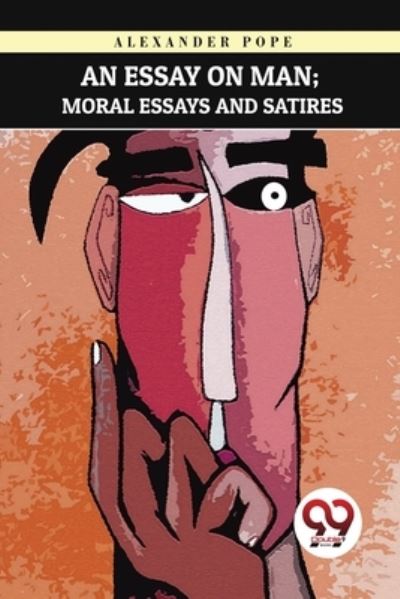
Alexander Pope published a poem titled "An Essay on Man: Moral Essays and Satires" between 1733 and 1734. The opening line, "Awake, St. John," refers to Henry St. John, 1st Viscount Bolingbroke, which is pronounced, "Bull-en-brook." In the opening lines of Paradise Lost, John Milton claims that he will "justify the methods of God to men," and this is an attempt to "vindicate the ways of God to man" (l.16) (1.26). It is focused on the natural order that God established for mankind. Man cannot protest about his place in the great chain of being since he cannot understand God's designs (ll. 33-34). Instead, he must accept that "Whatever is, is right," a subject that Voltaire parodied in Candide (1759). It spread optimistic thought more broadly than any other book throughout England and the rest of Europe. Pope intended for his Essay on Man and Moral Epistles to serve as the constituent pieces of poetic ethical philosophy. Ethic Epistles and Moral Essays are a couple of additional names for Moral Epistles. An Essay on Man was widely praised when it was first published in Europe. The most majestic didactic poetry is ever written in any language.
| ISBN: | 9789357278027 |
| Publication date: | 1st January 2023 |
| Author: | Alexander Pope |
| Publisher: | Double 9 Booksllp an imprint of Repro India Limited |
| Format: | Paperback |
| Pagination: | 164 pages |
| Genres: |
Religious and ceremonial art Biography: historical, political and military Poetry Literary essays Anthologies: general Literature: history and criticism Bibliographies, catalogues General and world history |
Alexander Pope published a poem titled "An Essay on Man: Moral Essays and Satires" between 1733 and 1734. The opening line, "Awake, St. John," refers to Henry St. John, 1st Viscount Bolingbroke, which is pronounced, "Bull-en-brook." In the opening lines of Paradise Lost, John Milton claims that he will "justify the methods of God to men," and this is an attempt to "vindicate the ways of God to man" (l.16) (1.26). It is focused on the natural order that God established for mankind. Man cannot protest about his place in the great chain of being since he cannot understand God's designs (ll. 33-34). Instead, he must accept that "Whatever is, is right," a subject that Voltaire parodied in Candide (1759). It spread optimistic thought more broadly than any other book throughout England and the rest of Europe. Pope intended for his Essay on Man and Moral Epistles to serve as the constituent pieces of poetic ethical philosophy. Ethic Epistles and Moral Essays are a couple of additional names for Moral Epistles. An Essay on Man was widely praised when it was first published in Europe. The most majestic didactic poetry is ever written in any language.
An Essay on Man; Moral Essays and Satires features in the following genres: Religious and ceremonial art, Biography: historical, political and military, Poetry, Literary essays, Anthologies: general, Literature: history and criticism, Bibliographies, catalogues, General and world history
An Essay on Man; Moral Essays and Satires is available in Paperback
An Essay on Man; Moral Essays and Satires was written by Alexander Pope and published by Double 9 Booksllp an imprint of Repro India Limited
An Essay on Man; Moral Essays and Satires has 164 pages
£12.59