

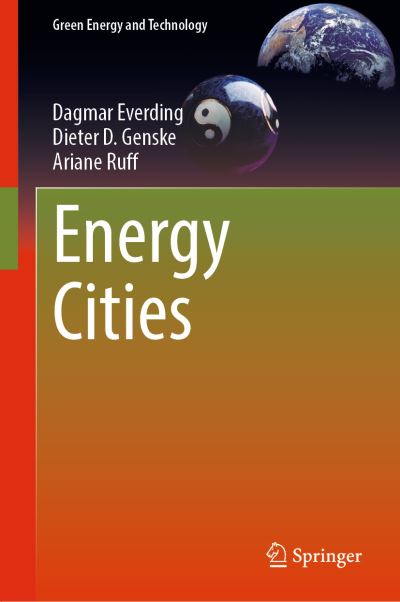
With cities and regions moving away from fossil-nuclear energy sources, the importance of energy-ecological urban transformation is growing. A growing number of stakeholders are committed to transitioning energy supplies to renewable sources and promoting resource-efficient ecological cycles in their communities. Energy-ecological urban transformation directly improves living and environmental conditions in neighborhoods, creates new economic opportunities, and generates jobs. Cities are being transformed into 'energy cities' that adhere to the principles of sustainability, minimizing energy-ecological footprints, and reducing land consumption.
This book envisions future scenarios of urban transformation for stakeholder discourse. It provides a cross-disciplinary description of urban planning, engineering, and economic approaches to energy-ecological urban transformation, including methodological solutions. Numerous interesting project examples are presented to illustrate these concepts.
The target audience for this book includes municipal administrations and climate protection managers, planning and engineering firms, environmental organizations, as well as students and educators.
| ISBN: | 9783662705834 |
| Publication date: | 6th June 2025 |
| Author: | Dagmar Everding, Dieter D Genske, Ariane Ruff |
| Publisher: | Springer an imprint of Springer Berlin Heidelberg |
| Format: | Hardback |
| Pagination: | 312 pages |
| Series: | Green Energy and Technology |
| Genres: |
Earth sciences Electrical engineering Geography The environment |
With cities and regions moving away from fossil-nuclear energy sources, the importance of energy-ecological urban transformation is growing. A growing number of stakeholders are committed to transitioning energy supplies to renewable sources and promoting resource-efficient ecological cycles in their communities.
Energy Cities features in the following genres: Earth sciences, Electrical engineering, Geography, The environment
Hardback. £98.99, down from the £109.99 cover price. Not Available.
Energy Cities was written by Dagmar Everding, Dieter D Genske, Ariane Ruff and published by Springer an imprint of Springer Berlin Heidelberg
Energy Cities has 312 pages
Yes it is part of Green Energy and Technology series
£98.99, reduced from £109.99. Not Available.