

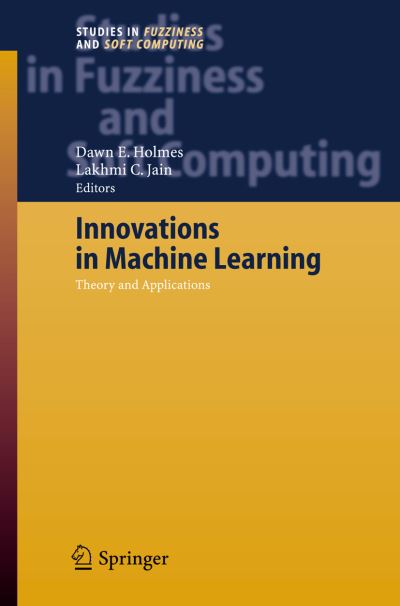
Machine learning is currently one of the most rapidly growing areas of research in computer science. In compiling this volume we have brought together contributions from some of the most prestigious researchers in this field. This book covers the three main learning systems; symbolic learning, neural networks and genetic algorithms as well as providing a tutorial on learning casual influences. Each of the nine chapters is self-contained.
Both theoreticians and application scientists/engineers in the broad area of artificial intelligence will find this volume valuable. It also provides a useful sourcebook for Postgraduate since it shows the direction of current research.
| ISBN: | 9783642067884 |
| Publication date: | 23rd November 2010 |
| Author: | Dawn E Holmes |
| Publisher: | Springer an imprint of Springer Berlin Heidelberg |
| Format: | Paperback |
| Pagination: | 276 pages |
| Series: | Studies in Fuzziness and Soft Computing |
| Genres: |
Maths for engineers Artificial intelligence |
Machine learning is currently one of the most rapidly growing areas of research in computer science. In compiling this volume we have brought together contributions from some of the most prestigious researchers in this field.
Innovations in Machine Learning features in the following genres: Maths for engineers, Artificial intelligence
Paperback. Not Available.
Innovations in Machine Learning was written by Dawn E Holmes and published by Springer an imprint of Springer Berlin Heidelberg
Innovations in Machine Learning has 276 pages
Yes it is part of Studies in Fuzziness and Soft Computing series