

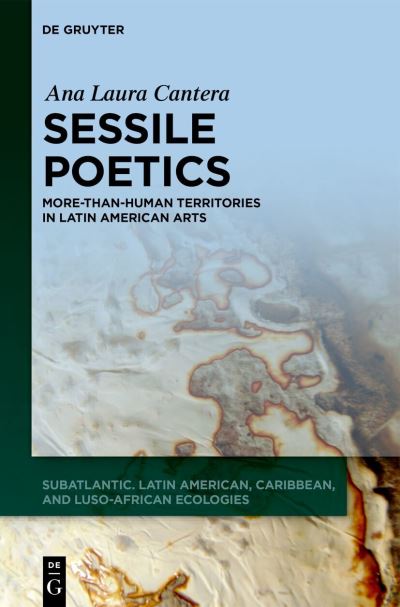
In these complex times of climate disasters, inequalities, and rampant capitalism, it is impossible to ignore how sociopolitical aspects in the Global South inherently emerge in artistic practices to make visible and denounce the injustices of the world economic system on both human and non-human territories and agents.
The concept of sessility in arts is borrowed from botany, where "sessile" organisms (e.g., plants/mushrooms) are rooted, immobile according to our scale, and deeply connected to their environment. Applied to artistic practices, it denotes works that prioritize rootedness, non-human agency, and material collaborations with ecological systems. Sessile poetics decentralizes human dominance by centering on the materialities and operations of non-human entities (e.g., soil, plants, minerals) to critique extractivisms, territorial violence, and colonial legacies mainly in Latin America, but not exclusive. These works use "anthropically decentralized" processes-such as integrating organic decay, geological timelines, or symbiotic relationships-to visualize ecological crises and imagine futures beyond the colonial apocalyptic future.
The framework emphasizes relationality between humans and more-than-human worlds to foster solidarity in crisis-ridden territories, as well as reimagine art as a site of resistance and material collaboration.
| ISBN: | 9783119144773 |
| Publication date: | 28th December 2026 |
| Author: | |
| Publisher: | De Gruyter |
| Format: | Hardback |
| Pagination: | 235 pages |
| Series: | SubAtlantic |
| Genres: |
Animals and society Cultural studies |
In these complex times of climate disasters, inequalities, and rampant capitalism, it is impossible to ignore how sociopolitical aspects in the Global South inherently emerge in artistic practices to make visible and denounce the injustices of the world economic system on both human and non-human territories and agents.The concept of sessility in arts is borrowed from botany, where "sessile" organisms (e.g., plants/mushrooms) are rooted, immobile according to our scale, and deeply connected to their environment. Applied to artistic practices, it denotes works that prioritize rootedness, non-human agency, and material collaborations with ecological systems.
features in the following genres: Animals and society, Cultural studies
Hardback, Paperback, Book, Board book, Ebook, . £81.90, down from the £91.00 cover price. Not Available.
was written by and published by De Gruyter
has 235 pages
Yes it is part of SubAtlantic series
£81.90, reduced from £91.00. Not Available.