

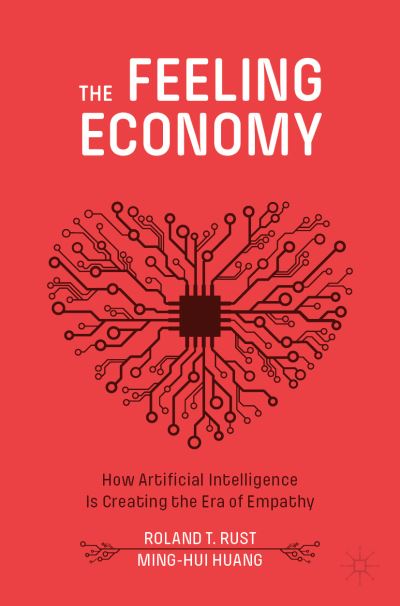
As machines are trained to "think," many tasks that previously required human intelligence are becoming automated through artificial intelligence. However, it is more difficult to automate emotional intelligence, and this is where the human worker's competitive advantage over machines currently lies. This book explores the impact of AI on everyday life, looking into workers' adaptation to these changes, the ways in which managers can change the nature of jobs in light of AI developments, and the potential for humans and AI to continue working together.
The book argues that AI is rapidly assuming a larger share of thinking tasks, leaving human intelligence to focus on feeling. The result is the "Feeling Economy," in which both employees and consumers emphasize feeling to an unprecedented extent, with thinking tasks largely delegated to AI. The book shows both theoretical and empirical evidence that this shift is well underway. Further, it explores the effect of the Feeling Economy on our everyday lives in the areas such as shopping, politics, and education. Specifically, it argues that in this new economy, through empathy and people skills, women may gain an unprecedented degree of power and influence. This book will appeal to readers across disciplines interested in understanding the impact of AI on business and our daily lives. It represents a bold, potentially controversial attempt to gauge the direction in which society is heading.| ISBN: | 9783030529765 |
| Publication date: | 19th January 2021 |
| Author: | Roland T Rust, MingHui Huang |
| Publisher: | Palgrave Macmillan an imprint of Springer International Publishing |
| Format: | Paperback |
| Pagination: | 179 pages |
| Genres: |
Business and Management Personnel and human resources management Business mathematics and systems Sales and marketing Business applications |
As machines are trained to "think," many tasks that previously required human intelligence are becoming automated through artificial intelligence. However, it is more difficult to automate emotional intelligence, and this is where the human worker's competitive advantage over machines currently lies.
The Feeling Economy features in the following genres: Business and Management, Personnel and human resources management, Business mathematics and systems, Sales and marketing, Business applications
Paperback. £26.99, down from the £29.99 cover price. Not Available.
The Feeling Economy was written by Roland T Rust, MingHui Huang and published by Palgrave Macmillan an imprint of Springer International Publishing
The Feeling Economy has 179 pages
£26.99, reduced from £29.99. Not Available.