

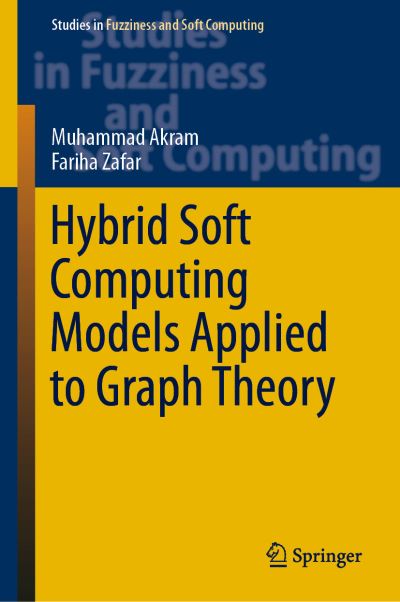
This book describes a set of hybrid fuzzy models showing how to use them to deal with incomplete and/or vague information in different kind of decision-making problems. Based on the authors' research, it offers a concise introduction to important models, ranging from rough fuzzy digraphs and intuitionistic fuzzy rough models to bipolar fuzzy soft graphs and neutrosophic graphs, explaining how to construct them.
For each method, applications to different multi-attribute, multi-criteria decision-making problems, are presented and discussed. The book, which addresses computer scientists, mathematicians, and social scientists, is intended as concise yet complete guide to basic tools for constructing hybrid intelligent models for dealing with some interesting real-world problems.
It is also expected to stimulate readers' creativity thus offering a source of inspiration for future research.
| ISBN: | 9783030160197 |
| Publication date: | 16th April 2019 |
| Author: | Muhammad Akram, Fariha Zafar |
| Publisher: | Springer an imprint of Springer International Publishing |
| Format: | Hardback |
| Pagination: | 434 pages |
| Series: | Studies in Fuzziness and Soft Computing |
| Genres: |
Artificial intelligence Expert systems / knowledge-based systems Management decision making Operational research Data mining |
This book describes a set of hybrid fuzzy models showing how to use them to deal with incomplete and/or vague information in different kind of decision-making problems. Based on the authors' research, it offers a concise introduction to important models, ranging from rough fuzzy digraphs and intuitionistic fuzzy rough models to bipolar fuzzy soft graphs and neutrosophic graphs, explaining how to construct them.
Hybrid Soft Computing Models Applied to Graph Theory features in the following genres: Artificial intelligence, Expert systems / knowledge-based systems, Management decision making, Operational research, Data mining
Hardback. Not Available.
Hybrid Soft Computing Models Applied to Graph Theory was written by Muhammad Akram, Fariha Zafar and published by Springer an imprint of Springer International Publishing
Hybrid Soft Computing Models Applied to Graph Theory has 434 pages
Yes it is part of Studies in Fuzziness and Soft Computing series