

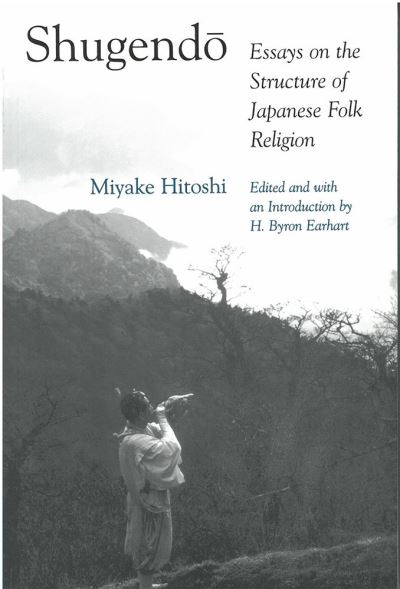
This volume of essays is the first comprehensive publication in English of the work of Miyake Hitoshi, a distinguished scholar of Shugendo (mountain asceticism) and one of the foremost researchers on Japanese folk religion. Miyake defines folk religion as "religion that merges from the necessities of community life." In Miyake's systematic methodological and theoretical approach, Shugendo is a classic example of Japanese folk religion, for it blends many traditions (shamanism, Taoism, Buddhism, and Shinto) into a distinctive Japanese religious worldview and is typical of Japanese religion generally.
The first part of this book is devoted to Shugendo's history, organization, ritual, austerities, thought, and cosmology. Related subjects include exorcism and the exclusion of women. The second part of the book provides research and reflection on Japanese folk religion, including essays on the idea of nature, worldly benefits, new religions, death and rebirth, and the structure of folk religion.
Shugendo: Essays on the Structure of Japanese Folk Religion clarifies much of the logic behind Japanese religious syncretism. It is essential reading not only for those interested in Japanese history, culture, and religion but also for those studying world religions and folk culture.
| ISBN: | 9781929280384 |
| Publication date: | 5th January 2007 |
| Author: | Hitoshi Miyake |
| Publisher: | University of Michigan, Center for Japanese Studies an imprint of University of Michigan Press |
| Format: | Paperback |
| Pagination: | 322 pages |
| Series: | Michigan Monograph Series in Japanese Studies |
| Genres: |
Ethnic studies Anthropology Religion and beliefs |
This volume of essays is the first comprehensive publication in English of the work of Miyake Hitoshi, a distinguished scholar of Shugendo (mountain asceticism) and one of the foremost researchers on Japanese folk religion. The first part of this book is devoted to Shugendo's history, organization, ritual, austerities, thought, and cosmology.
Shugendo features in the following genres: Ethnic studies, Anthropology, Religion and beliefs
Paperback. Not Available.
Shugendo was written by Hitoshi Miyake and published by University of Michigan, Center for Japanese Studies an imprint of University of Michigan Press
Shugendo has 322 pages
Yes it is part of Michigan Monograph Series in Japanese Studies series