

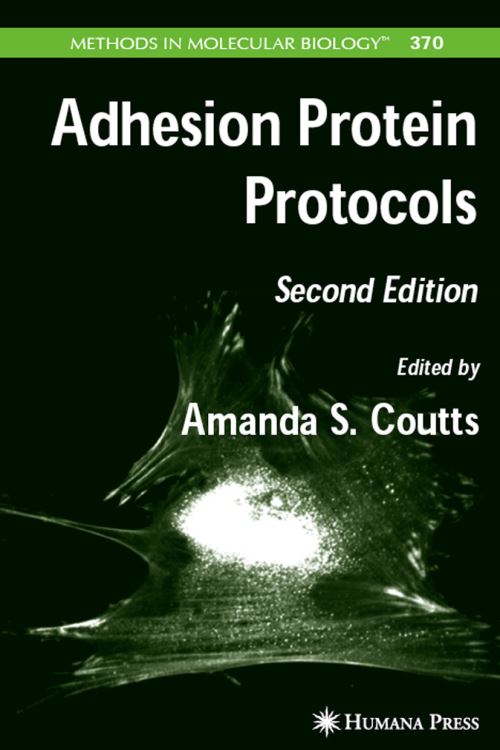
The second edition of Adhesion Protein Protocols combines traditional techniques with cutting-edge and new techniques that can be adapted easily to different molecules and cell types. The topics discussed in this updated second edition include novel techniques for studying cell-cell adhesion, neutrophil chemotaxis, in vitro assays used to study leukocyte migration through monolayers of cultured endothelial cells, and novel techniques to purify pseudopodia from migratory cells. This book also discusses the study of cell-matrix interaction, RNA interference, fluorescence recovery after photobleaching, actin purification, the application of microarray techniques, and the role of adhesion proteins in the study of proteomics. The protocols discussed in this volume are suitable for both novice and expert scientists, who will gain further insight into the complex and incompletely understood processes involved in cellular adhesion.
| ISBN: | 9781617376252 |
| Publication date: | 9th December 2010 |
| Author: | Amanda S Coutts |
| Publisher: | Humana Press |
| Format: | Paperback |
| Pagination: | 234 pages |
| Series: | Methods in Molecular Biology |
| Genres: |
Cellular biology (cytology) Computational biology / bioinformatics Biochemistry |
The second edition of Adhesion Protein Protocols combines traditional techniques with cutting-edge and new techniques that can be adapted easily to different molecules and cell types. The topics discussed in this updated second edition include novel techniques for studying cell-cell adhesion, neutrophil chemotaxis, in vitro assays used to study leukocyte migration through monolayers of cultured endothelial cells, and novel techniques to purify pseudopodia from migratory cells.
Adhesion Protein Protocols features in the following genres: Cellular biology (cytology), Computational biology / bioinformatics, Biochemistry
Paperback, Hardback. Not Available.
Adhesion Protein Protocols was written by Amanda S Coutts and published by Humana Press
Adhesion Protein Protocols has 234 pages
Yes it is part of Methods in Molecular Biology series