

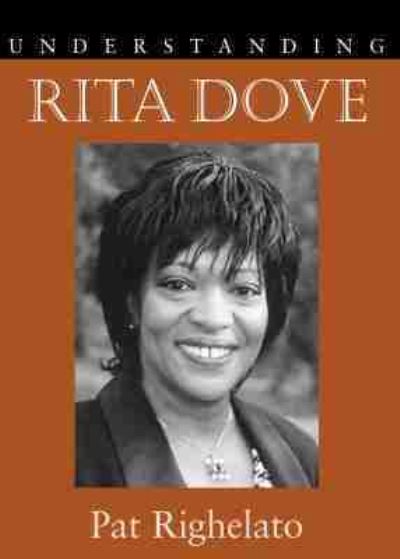
Understanding Rita Dove serves as a critical introduction to the poetry of the Pulitzer Prize-winning writer who was also the first African American poet laureate of the United States. Through close readings of seven poetry collections, Pat Righelato offers detailed analyses of Rita Dove's thematic concerns and artistic development while bringing to light the musical sense of form and expression of history that permeates Dove's work.
While underscoring each collection's distinctive identity, Righelato explores the continuities that link volume to volume, from the earliest chapbooks to Dove's most recent collection, ""American Smooth"". Charting Dove's evolution as a poet, Righelato begins with ""The Yellow House on the Corner"" to identify motifs of the mythical, historical, familial, and autobiographical that have become the writer's artistic capital.
Dove brings African American experience to the mainstream of American poetry in ""Thomas and Beulah"" and ""On the Bus with Rosa Parks"". Righelato positions Dove as a successor to Robert Lowell in that her preoccupation with family history is exemplary of American culture. Righelato also argues for viewing Dove as markedly international.
In particular Righelato illuminates Dove's affinity with the poet Rainer Maria Rilke in a feminist reading of ""Mother Love"", a volume written in respectful engagement with his Sonnets to Orpheus.
| ISBN: | 9781570036378 |
| Publication date: | 31st July 2006 |
| Author: | Pat Righelato |
| Publisher: | The University of South Carolina Press |
| Format: | Hardback |
| Pagination: | 249 pages |
| Series: | Understanding Contemporary American Literature |
| Genres: |
Literary studies: poetry and poets Literary studies: c 1900 to c 2000 |
Understanding Rita Dove serves as a critical introduction to the poetry of the Pulitzer Prize-winning writer who was also the first African American poet laureate of the United States. Through close readings of seven poetry collections, Pat Righelato offers detailed analyses of Rita Dove's thematic concerns and artistic development while bringing to light the musical sense of form and expression of history that permeates Dove's work.
Understanding Rita Dove features in the following genres: Literary studies: poetry and poets, Literary studies: c 1900 to c 2000
Hardback. Not Available.
Understanding Rita Dove was written by Pat Righelato and published by The University of South Carolina Press
Understanding Rita Dove has 249 pages
Yes it is part of Understanding Contemporary American Literature series