

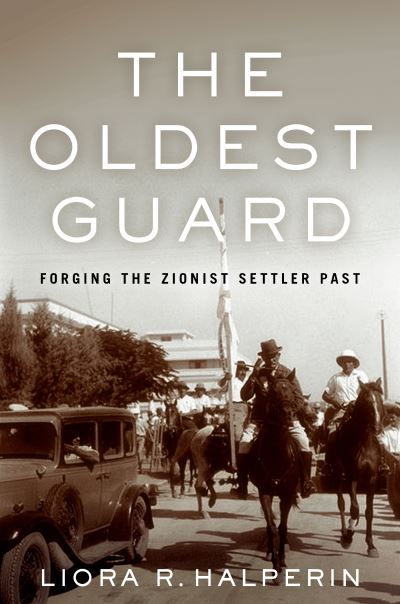
The Oldest Guard tells the story of Zionist settler memory in and around the private Jewish agricultural colonies (moshavot) established in late nineteenth-century Ottoman Palestine. Though they grew into the backbone of lucrative citrus and wine industries of mandate Palestine and Israel, absorbed tens of thousands of Jewish immigrants, and became known as the "first wave" (First Aliyah) of Zionist settlement, these communities have been regarded-and disregarded-in the history of Zionism as sites of conservatism, lack of ideology, and resistance to Labor Zionist politics.
Treating the "First Aliyah" as a symbol created and deployed only in retrospect, Liora R. Halperin offers a richly textured portrait of commemorative practices between the 1920s and the 1960s. Drawing connections to memory practices in other settler societies, The Oldest Guard demonstrates how private agriculturalists and their advocates in the Zionist center and on the right celebrated and forged the "First Aliyah" past, revealing the centrality of settlement to Zionist collective memory and the politics of Zionist settler "firstness."
| ISBN: | 9781503628700 |
| Publication date: | 10th August 2021 |
| Author: | Liora R Halperin |
| Publisher: | Stanford University Press |
| Format: | Paperback |
| Pagination: | 368 pages |
| Series: | Stanford Studies in Jewish History and Culture |
| Genres: |
Social groups: religious groups and communities Social and cultural history Middle Eastern history |
The Oldest Guard tells the story of Zionist settler memory in and around the private Jewish agricultural colonies (moshavot) established in late nineteenth-century Ottoman Palestine. Though they grew into the backbone of lucrative citrus and wine industries of mandate Palestine and Israel, absorbed tens of thousands of Jewish immigrants, and became known as the "first wave" (First Aliyah) of Zionist settlement, these communities have been regarded-and disregarded-in the history of Zionism as sites of conservatism, lack of ideology, and resistance to Labor Zionist politics.
Treating the "First Aliyah" as a symbol created and deployed only in retrospect, Liora R. Halperin offers a richly textured portrait of commemorative practices between the 1920s and the 1960s. Drawing connections to memory practices in other settler societies, The Oldest Guard demonstrates how private agriculturalists and their advocates in the Zionist center and on the right celebrated and forged the "First Aliyah" past, revealing the centrality of settlement to Zionist collective memory and the politics of Zionist settler "firstness."
The Oldest Guard features in the following genres: Social groups: religious groups and communities, Social and cultural history, Middle Eastern history
The Oldest Guard is available in Paperback, Hardback
The Oldest Guard was written by Liora R Halperin and published by Stanford University Press
The Oldest Guard has 368 pages
Yes it is part of Stanford Studies in Jewish History and Culture series