

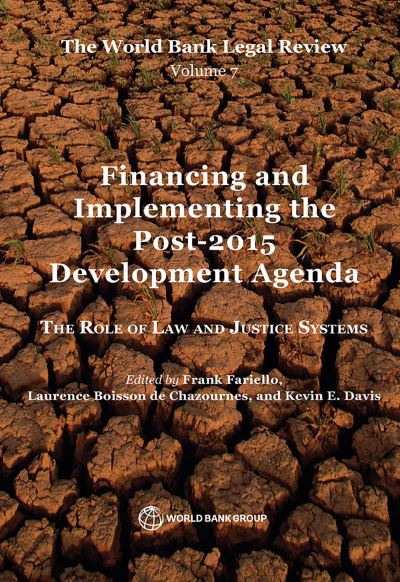
The newly adopted post-2015 development agenda is centered on 17 sustainable development goals to be reached by 2030. This volume of the World Bank Legal Review looks at how law and justice systems can support the financing and implementation of these goals, including the role of the rule of law and economic and social rights. The contributors, including legal scholars, development practitioners, and financial experts, analyze the goals, explore ways in which they can be achieved, and examine ways that recent relevant law and justice programs have worked. A wide array of topics are covered, from the legal aspects of collecting and monitoring vital data, to improving legal identity programs, to creating innovative health care regulation, to legal and judicial reform, to providing private sector-financing of public education projects to the provision of global public goods. The opportunities and challenges of the 2030 agenda are many. This volume looks at both from multiple perspectives, demonstrating how sustainable development can go forward in a way in which everyone benefits.
| ISBN: | 9781464805455 |
| Publication date: | 30th September 2016 |
| Author: | World Bank Group |
| Publisher: | World Bank Publications an imprint of The World Bank |
| Format: | Paperback |
| Pagination: | 318 pages |
| Series: | The World Bank Legal Review |
| Genres: |
Methods, theory and philosophy of law |
The newly adopted post-2015 development agenda is centered on 17 sustainable development goals to be reached by 2030. This volume of the World Bank Legal Review looks at how law and justice systems can support the financing and implementation of these goals, including the role of the rule of law and economic and social rights. The contributors, including legal scholars, development practitioners, and financial experts, analyze the goals, explore ways in which they can be achieved, and examine ways that recent relevant law and justice programs have worked. A wide array of topics are covered, from the legal aspects of collecting and monitoring vital data, to improving legal identity programs, to creating innovative health care regulation, to legal and judicial reform, to providing private sector-financing of public education projects to the provision of global public goods. The opportunities and challenges of the 2030 agenda are many. This volume looks at both from multiple perspectives, demonstrating how sustainable development can go forward in a way in which everyone benefits.
Financing and Implementing the Post-2015 Development Agenda features in the following genres: Methods, theory and philosophy of law
Financing and Implementing the Post-2015 Development Agenda is available in Paperback
Financing and Implementing the Post-2015 Development Agenda was written by World Bank Group and published by World Bank Publications an imprint of The World Bank
Financing and Implementing the Post-2015 Development Agenda has 318 pages
Yes it is part of The World Bank Legal Review series