

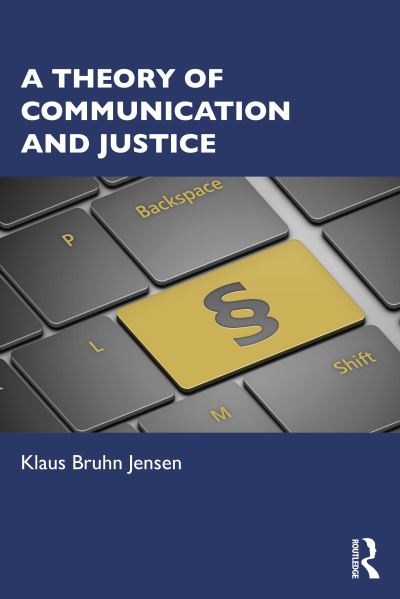
This book outlines a theory of communication and justice for the digital age, updating classic positions in political philosophy and ethics, and engaging thinkers from Aristotle through Immanuel Kant and the American pragmatists to John Rawls, Jürgen Habermas, and Amartya Sen.
In communication seeking to define justice and call out injustice, there is such a thing as the last word. The chapters in this book trace the historical emergence of communication as a human right; specify the technological resources and institutional frameworks necessary for exercising that right; and address some of the challenges following from digitalization that currently confront citizens, national regulators, and international agencies. Among the issues covered are public access to information archives past and present; local and global networks of communication as sources of personal identities and imagined communities; the ongoing reconfiguration of the press as a fourth branch of governance; and privacy as a precondition for individuals and collectives to live their lives according to plans, and to make their own histories.
The book will be of interest to students and researchers in media and communication studies, cultural studies, political philosophy and ethics, and interdisciplinary fields examining the ethical and political implications of new information and communication infrastructures.
| ISBN: | 9781138807266 |
| Publication date: | 30th December 2020 |
| Author: | Klaus Bruhn Jensen |
| Publisher: | Routledge an imprint of Taylor & Francis |
| Format: | Paperback |
| Pagination: | 306 pages |
| Genres: |
Media studies History |
This book outlines a theory of communication and justice for the digital age, updating classic positions in political philosophy and ethics, and engaging thinkers from Aristotle through Immanuel Kant and the American pragmatists to John Rawls, Jürgen Habermas, and Amartya Sen.
In communication seeking to define justice and call out injustice, there is such a thing as the last word. The chapters in this book trace the historical emergence of communication as a human right; specify the technological resources and institutional frameworks necessary for exercising that right; and address some of the challenges following from digitalization that currently confront citizens, national regulators, and international agencies. Among the issues covered are public access to information archives past and present; local and global networks of communication as sources of personal identities and imagined communities; the ongoing reconfiguration of the press as a fourth branch of governance; and privacy as a precondition for individuals and collectives to live their lives according to plans, and to make their own histories.
The book will be of interest to students and researchers in media and communication studies, cultural studies, political philosophy and ethics, and interdisciplinary fields examining the ethical and political implications of new information and communication infrastructures.
A Theory of Communication and Justice features in the following genres: Media studies, History
A Theory of Communication and Justice is available in Hardback, Paperback
A Theory of Communication and Justice was written by Klaus Bruhn Jensen and published by Routledge an imprint of Taylor & Francis
A Theory of Communication and Justice has 306 pages
£36.89