

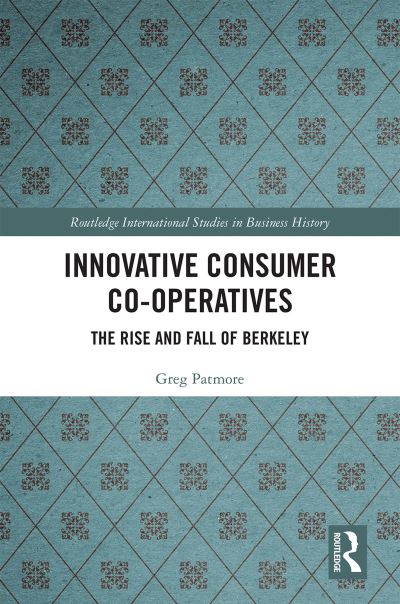
Consumer co-operatives provide a different approach to organizing business through their ideals of member ownership and democratic practice. Every co-operative member has an equal vote regardless of his or her own personal capital investment. The co-operative movement can also be an important force in promoting development and self-sufficiency in poorer areas, particularly in non-industrialised countries.
This book explores in depth the fortunes of the Berkeley Consumer Co-operative, which became the largest consumer co-operative in the United States with 116,000 members in 1984 and viewed nationally as a leader in innovative retail practices and a champion of consumer rights. The Berkeley Consumer Co-operative is promoted by both supporters and opponents of the co-operative business model as a significant example of what can go wrong with the co-operatives.
This book will provide the first in depth analysis of the history of the Berkeley Co-operative using its substantial but little used archives and oral histories to explore what the Berkeley experience means for the co-operative business model. The specific chapters relating to Berkeley will be organised around particular themes to highlight the issues relating to the co-operative business model and the local context of Berkeley. The themes relate to developments in Berkeley and the Bay Area in terms of the economy, politics and the retail environment; the management of the Berkeley co-operative, looking at governance, financial management and strategic decisions; relationship of management with members and employees; and finally, the relationship of the Berkeley Co-operative with the community.
The core message of the book is that it is not inevitable that consumer co-operatives fail, but that the story of Berkeley story can provide insights that can strengthen the co-operative business model and minimise failures on the scale of Berkeley occurring in the future.
| ISBN: | 9781138614109 |
| Publication date: | 6th May 2020 |
| Author: | Greg Patmore |
| Publisher: | Routledge an imprint of Taylor & Francis |
| Format: | Hardback |
| Pagination: | 310 pages |
| Series: | Routledge International Studies in Business History |
| Genres: |
Operational research Research and development management Sociology: work and labour Public ownership / nationalization History of the Americas Organizational theory and behaviour Business mathematics and systems Sales and marketing Entrepreneurship / Start-ups Politics and government |
Consumer co-operatives provide a different approach to organizing business through their ideals of member ownership and democratic practice. Every co-operative member has an equal vote regardless of his or her own personal capital investment. The co-operative movement can also be an important force in promoting development and self-sufficiency in poorer areas, particularly in non-industrialised countries.
This book explores in depth the fortunes of the Berkeley Consumer Co-operative, which became the largest consumer co-operative in the United States with 116,000 members in 1984 and viewed nationally as a leader in innovative retail practices and a champion of consumer rights. The Berkeley Consumer Co-operative is promoted by both supporters and opponents of the co-operative business model as a significant example of what can go wrong with the co-operatives.
This book will provide the first in depth analysis of the history of the Berkeley Co-operative using its substantial but little used archives and oral histories to explore what the Berkeley experience means for the co-operative business model. The specific chapters relating to Berkeley will be organised around particular themes to highlight the issues relating to the co-operative business model and the local context of Berkeley. The themes relate to developments in Berkeley and the Bay Area in terms of the economy, politics and the retail environment; the management of the Berkeley co-operative, looking at governance, financial management and strategic decisions; relationship of management with members and employees; and finally, the relationship of the Berkeley Co-operative with the community.
The core message of the book is that it is not inevitable that consumer co-operatives fail, but that the story of Berkeley story can provide insights that can strengthen the co-operative business model and minimise failures on the scale of Berkeley occurring in the future.
Innovative Consumer Co-Operatives features in the following genres: Operational research, Research and development management, Sociology: work and labour, Public ownership / nationalization, History of the Americas, Organizational theory and behaviour, Business mathematics and systems, Sales and marketing, Entrepreneurship / Start-ups, Politics and government
Innovative Consumer Co-Operatives is available in Hardback, Ebook
Innovative Consumer Co-Operatives was written by Greg Patmore and published by Routledge an imprint of Taylor & Francis
Innovative Consumer Co-Operatives has 310 pages
Yes it is part of Routledge International Studies in Business History series
£139.50