

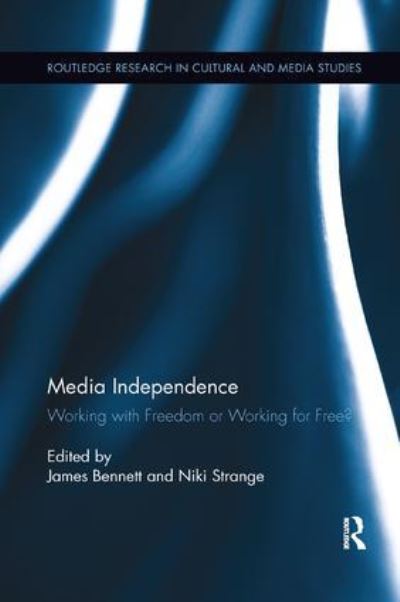
Media independence is central to the organization, make-up, working practices and output of media systems across the globe. Often stemming from western notions of individual and political freedoms, independence has informed the development of media across a range of platforms: from the freedom of the press as the "fourth estate" and the rise of Hollywood's Independent studios and Independent television in Britain, through to the importance of "Indy" labels in music and gaming and the increasing importance of independence of voice in citizen journalism. Media independence for many, therefore, has come to mean working with freedom: from state control or interference, from monopoly, from market forces, as well as freedom to report, comment, create and document without fear of persecution. However, far from a stable concept that informs all media systems, the notion of media independence has long been contested, forming a crucial tension point in the regulation, shape, size and role of the media around the globe.
Contributors including David Hesmondhalgh, Gholam Khiabany, José van Dijck, Hector Postigo, Anthony Fung, Stuart Allan and Geoff King demonstrate how the notion of independence has remained paramount, but contested, in ideals of what the media is for, how it should be regulated, what it should produce and what working within it should be like. They address questions of economics, labor relations, production cultures, ideologies and social functions.
| ISBN: | 9781138548459 |
| Publication date: | 6th February 2018 |
| Author: | James Bennett, Niki Strange |
| Publisher: | Routledge an imprint of Taylor & Francis |
| Format: | Paperback |
| Pagination: | 308 pages |
| Series: | Routledge Research in Cultural and Media Studies |
| Genres: |
Media studies News media and journalism Cultural studies Filmmaking and production: technical and background skills Popular music Music recording and reproduction Communication studies |
Media independence is central to the organization, make-up, working practices and output of media systems across the globe. Often stemming from western notions of individual and political freedoms, independence has informed the development of media across a range of platforms: from the freedom of the press as the "fourth estate" and the rise of Hollywood's Independent studios and Independent television in Britain, through to the importance of "Indy" labels in music and gaming and the increasing importance of independence of voice in citizen journalism. Media independence for many, therefore, has come to mean working with freedom: from state control or interference, from monopoly, from market forces, as well as freedom to report, comment, create and document without fear of persecution. However, far from a stable concept that informs all media systems, the notion of media independence has long been contested, forming a crucial tension point in the regulation, shape, size and role of the media around the globe.
Contributors including David Hesmondhalgh, Gholam Khiabany, José van Dijck, Hector Postigo, Anthony Fung, Stuart Allan and Geoff King demonstrate how the notion of independence has remained paramount, but contested, in ideals of what the media is for, how it should be regulated, what it should produce and what working within it should be like. They address questions of economics, labor relations, production cultures, ideologies and social functions.
Media Independence features in the following genres: Media studies, News media and journalism, Cultural studies, History, The Arts
Media Independence is available in Paperback
Media Independence was written by James Bennett, Niki Strange and published by Routledge an imprint of Taylor & Francis
Media Independence has 308 pages
Yes it is part of Routledge Research in Cultural and Media Studies series