

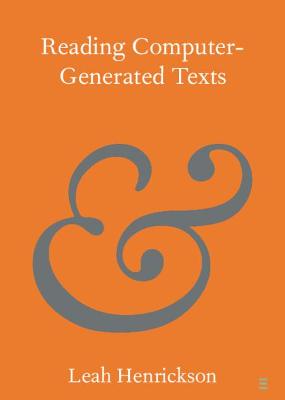
Natural language generation (NLG) is the process wherein computers produce output in readable human languages. Such output takes many forms, including news articles, sports reports, prose fiction, and poetry. These computer-generated texts are often indistinguishable from human-written texts, and they are increasingly prevalent.
NLG is here, and it is everywhere. However, readers are often unaware that what they are reading has been computer-generated. This Element considers how NLG conforms to and confronts traditional understandings of authorship and what it means to be a reader.
It argues that conventional conceptions of authorship, as well as of reader responsibility, change in instances of NLG. What is the social value of a computer-generated text? What does NLG mean for modern writing, publishing, and reading practices?
Can an NLG system be considered an author? This Element explores such question, while presenting a theoretical basis for future studies.
| ISBN: | 9781108822862 |
| Publication date: | 11th February 2021 |
| Author: | Leah University of Leeds Henrickson |
| Publisher: | Cambridge University Press |
| Format: | Paperback |
| Pagination: | 75 pages |
| Series: | Elements in Publishing and Book Culture |
| Genres: |
Literature: history and criticism Publishing and book trade Natural language and machine translation |
Natural language generation (NLG) is the process wherein computers produce output in readable human languages. Such output takes many forms, including news articles, sports reports, prose fiction, and poetry.
Reading Computer-Generated Texts features in the following genres: Literature: history and criticism, Publishing and book trade, Natural language and machine translation
Paperback. Not Available.
Reading Computer-Generated Texts was written by Leah University of Leeds Henrickson and published by Cambridge University Press
Reading Computer-Generated Texts has 75 pages
Yes it is part of Elements in Publishing and Book Culture series