

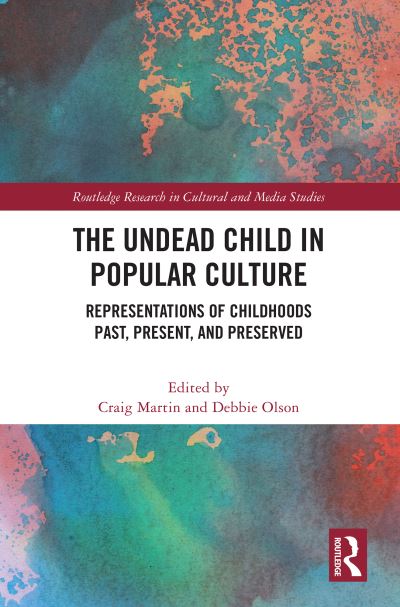
In this study of representations of children and childhood, a global team of authors explores the theme of undeadness as it applies to cultural constructions of the child.
Moving beyond conventional depictions of the undead in popular culture as living dead monsters of horror and mad science that transgress the borders between life and death, rejuvenation, and decay, the authors present undeadness as a broader concept that explores how people, objects, customs, and ideas deemed lost or consigned to the past might endure in the present. The chapters examine nostalgic texts that explore past incarnations of childhood, mementos of childhood, zombie children, spectral children, images and artefacts of deceased children, as well as states of arrested development and the inability or refusal to embrace adulthood. Expanding undeadness beyond the realm of horror and extending its meaning conceptually, while acknowledging its roots in the genre, the book explores attempts at countering the transitory nature of childhoods.
This unique and insightful volume will interest scholars and students working on popular culture and cultural studies, media studies, film and television studies, childhood studies, gender studies, and philosophy.
| ISBN: | 9781032657585 |
| Publication date: | 7th August 2024 |
| Author: | Craig Martin, Debbie C Olson |
| Publisher: | Routledge an imprint of Taylor & Francis |
| Format: | Hardback |
| Pagination: | 238 pages |
| Series: | Routledge Research in Cultural and Media Studies |
| Genres: |
Popular culture Media studies: TV and society Gender studies, gender groups Sociology: death and dying Anthropology Medical sociology Literary studies: general Philosophy |
In this study of representations of children and childhood, a global team of authors explores the theme of undeadness as it applies to cultural constructions of the child.
Moving beyond conventional depictions of the undead in popular culture as living dead monsters of horror and mad science that transgress the borders between life and death, rejuvenation, and decay, the authors present undeadness as a broader concept that explores how people, objects, customs, and ideas deemed lost or consigned to the past might endure in the present. The chapters examine nostalgic texts that explore past incarnations of childhood, mementos of childhood, zombie children, spectral children, images and artefacts of deceased children, as well as states of arrested development and the inability or refusal to embrace adulthood. Expanding undeadness beyond the realm of horror and extending its meaning conceptually, while acknowledging its roots in the genre, the book explores attempts at countering the transitory nature of childhoods.
This unique and insightful volume will interest scholars and students working on popular culture and cultural studies, media studies, film and television studies, childhood studies, gender studies, and philosophy.
The Undead Child in Popular Culture features in the following genres: Popular culture, Media studies: TV and society, Gender studies, gender groups, Sociology: death and dying, Anthropology, Medical sociology, Literary studies: general, Philosophy
The Undead Child in Popular Culture is available in Hardback
The Undead Child in Popular Culture was written by Craig Martin, Debbie C Olson and published by Routledge an imprint of Taylor & Francis
The Undead Child in Popular Culture has 238 pages
Yes it is part of Routledge Research in Cultural and Media Studies series
£126.00