

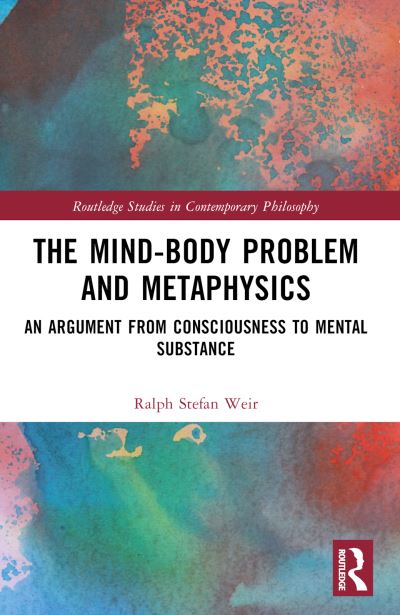
This book evaluates the widespread preference in philosophy of mind for varieties of property dualism over other alternatives to physicalism. It takes the standard motivations for property dualism as a starting point and argues that these lead directly to nonphysical substances resembling the soul of traditional metaphysics.
In the first half of the book, the author clarifies what is at issue in the choice between theories that posit nonphysical properties only and those that posit nonphysical substances. The crucial question, he argues, is whether one posits nonphysical things that satisfy an Aristotelian-Cartesian independence definition of substance: nonphysical things that could exist in the absence of anything else.
In the second half, the author argues that standard and Russellian monist forms of property dualism are far less plausible than we usually suppose. Most significantly, the presuppositions of one of the leading arguments for property dualism, the conceivability argument, lead by parity of reasoning to the view that conscious subjects are nonphysical substances.
He concludes that if you posit nonphysical properties in response to the mind-body problem, then you should be prepared to posit nonphysical substances as well. Mainstream philosophy of mind must take nonphysical substances far more seriously than it has done for the best part of a century.
The Mind-Body Problem and Metaphysics will be of interest to scholars and advanced students working in philosophy of mind, metaphysics, and the history of philosophy.
| ISBN: | 9781032457697 |
| Publication date: | 28th November 2024 |
| Author: | Ralph Stefan Weir |
| Publisher: | Routledge an imprint of Taylor & Francis |
| Format: | Paperback |
| Pagination: | 178 pages |
| Series: | Routledge Studies in Contemporary Philosophy |
| Genres: |
Philosophy of mind Western philosophy: Enlightenment Philosophy: metaphysics and ontology Psychology |
This book evaluates the widespread preference in philosophy of mind for varieties of property dualism over other alternatives to physicalism. It takes the standard motivations for property dualism as a starting point and argues that these lead directly to nonphysical substances resembling the soul of traditional metaphysics.In the first half of the book, the author clarifies what is at issue in the choice between theories that posit nonphysical properties only and those that posit nonphysical substances.
The Mind-Body Problem and Metaphysics features in the following genres: Philosophy of mind, Western philosophy: Enlightenment, Philosophy: metaphysics and ontology, Psychology
Paperback. £39.59, down from the £43.99 cover price. Not Available.
The Mind-Body Problem and Metaphysics was written by Ralph Stefan Weir and published by Routledge an imprint of Taylor & Francis
The Mind-Body Problem and Metaphysics has 178 pages
Yes it is part of Routledge Studies in Contemporary Philosophy series
£39.59, reduced from £43.99. Not Available.