

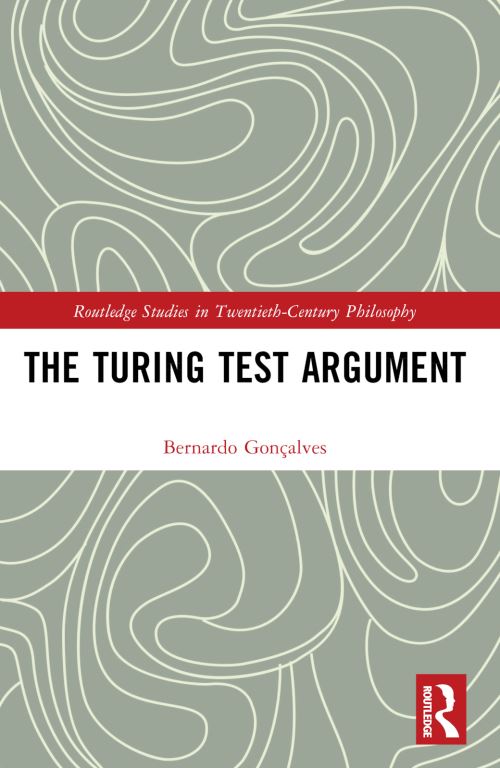
This book departs from existing accounts of Alan Turing's imitation game and test by placing Turing's proposal in its historical, social, and cultural context.
It reconstructs a controversy in England, 1946-1952, over the intellectual capabilities of digital computers, which led Turing to propose his test. It argues that the Turing test is best understood not as a practical experiment, but as a thought experiment in the modern scientific tradition of Galileo Galilei.
The logic of the Turing test argument is reconstructed from the rhetoric of Turing's irony and wit. Turing believed that learning machines should be understood as a new kind of species, and their thinking as different from human thinking and yet capable of imitating it. He thought that the possibilities of the machines he envisioned were not utopian dreams.
And yet he hoped that they would rival and surpass chauvinists and intellectuals who sacrifice independent thinking to maintain their power. These would be transformed into ordinary people, as work once considered 'intellectual' would be transformed into non-intellectual, 'mechanical' work.
The Turing Test Argument will appeal to scholars and students in the sciences and humanities and all those interested in Turing's vision of the future of intelligent machines in society and nature.
| ISBN: | 9781032291581 |
| Publication date: | 6th May 2025 |
| Author: | Bernardo Gonçalves |
| Publisher: | Routledge an imprint of Taylor & Francis |
| Format: | Paperback |
| Pagination: | 226 pages |
| Series: | Routledge Studies in Twentieth-Century Philosophy |
| Genres: |
Artificial intelligence Western philosophy from c 1800 Philosophy: epistemology and theory of knowledge Philosophy of mind Philosophy of science History of science History |
This book departs from existing accounts of Alan Turing's imitation game and test by placing Turing's proposal in its historical, social, and cultural context.It reconstructs a controversy in England, 1946-1952, over the intellectual capabilities of digital computers, which led Turing to propose his test. It argues that the Turing test is best understood not as a practical experiment, but as a thought experiment in the modern scientific tradition of Galileo Galilei.
The Turing Test Argument features in the following genres: Artificial intelligence, Western philosophy from c 1800, Philosophy: epistemology and theory of knowledge, Philosophy of mind, Philosophy of science, History of science, History
Paperback. £43.19, down from the £47.99 cover price. Not Available.
The Turing Test Argument was written by Bernardo Gonçalves and published by Routledge an imprint of Taylor & Francis
The Turing Test Argument has 226 pages
Yes it is part of Routledge Studies in Twentieth-Century Philosophy series
£43.19, reduced from £47.99. Not Available.