

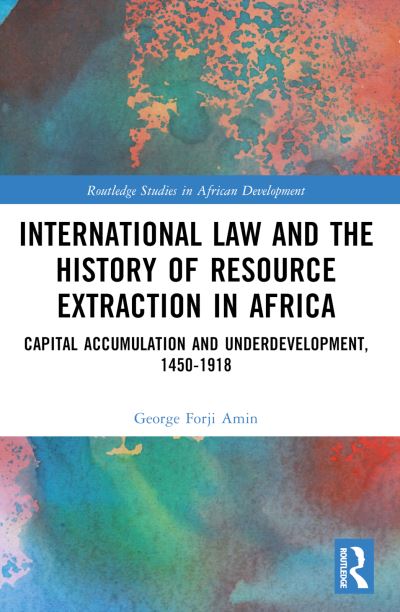
This book investigates the historical economic and legal regimes that legitimated the resource extraction and exploitation of Africa between the 15th and 19th centuries and led to the continent's trajectory of underdevelopment in the world system.
The book interrogates the economic and legal structures that supported European intervention in Africa. It explores the trade and private property rights which were to shape the economic future of the continent, most notably the trade in human beings as legitimate private property by European powers. The book then looks at the techniques used to submerge African sovereignty under European sovereignty during the scramble for territorial control in the 19th century, concluding with the validation of occupation in international law following the 1884-85 Berlin Conference. The book argues that the doctrines of trade and property rights sanctioned by international law led to a trend of African dispossession that set the continent on a path to underdevelopment, with long-reaching consequences.
This book will be of interest to researchers and students across law, history, economics, international relations, and African studies.
| ISBN: | 9781032208930 |
| Publication date: | 18th December 2024 |
| Author: | George Forji Amin |
| Publisher: | Routledge an imprint of Taylor & Francis |
| Format: | Paperback |
| Pagination: | 296 pages |
| Series: | Routledge Studies in African Development |
| Genres: |
African history Colonialism and imperialism Slavery and abolition of slavery Cultural studies Social discrimination and social justice Ethnic studies International institutions Development economics and emerging economies Political economy Systems of law Sociology Comparative politics Regional / International studies Interdisciplinary studies |
This book investigates the historical economic and legal regimes that legitimated the resource extraction and exploitation of Africa between the 15th and 19th centuries and led to the continent's trajectory of underdevelopment in the world system.
The book interrogates the economic and legal structures that supported European intervention in Africa. It explores the trade and private property rights which were to shape the economic future of the continent, most notably the trade in human beings as legitimate private property by European powers. The book then looks at the techniques used to submerge African sovereignty under European sovereignty during the scramble for territorial control in the 19th century, concluding with the validation of occupation in international law following the 1884-85 Berlin Conference. The book argues that the doctrines of trade and property rights sanctioned by international law led to a trend of African dispossession that set the continent on a path to underdevelopment, with long-reaching consequences.
This book will be of interest to researchers and students across law, history, economics, international relations, and African studies.
International Law and the History of Resource Extraction in Africa features in the following genres: African history, Colonialism and imperialism, Slavery and abolition of slavery, Cultural studies, Social discrimination and social justice, Ethnic studies, International institutions, Development economics and emerging economies, Political economy, Systems of law, Sociology, Comparative politics, Regional / International studies, Interdisciplinary studies
International Law and the History of Resource Extraction in Africa is available in Paperback, Hardback
International Law and the History of Resource Extraction in Africa was written by George Forji Amin and published by Routledge an imprint of Taylor & Francis
International Law and the History of Resource Extraction in Africa has 296 pages
Yes it is part of Routledge Studies in African Development series
£37.79