

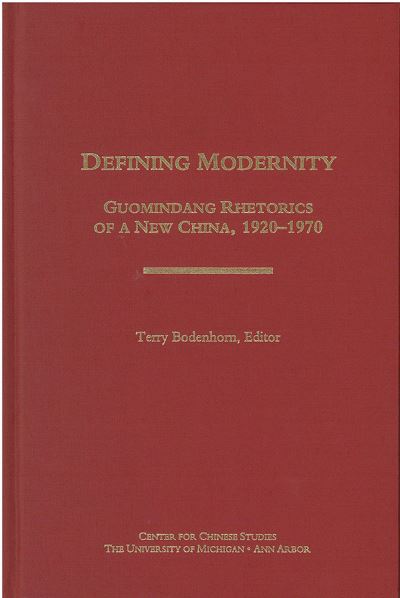
Over the course of the twentieth century, the Guomindang, also known as the KMT or Nationalist Party, articulated and marketed symbols, traits, and institutions crucial to a modernizing China. These included tangible elements (paper money, flags, national anthems), specific institutions (educational, governmental, and scientific facilities), and intangible qualities (nationalism, social trust, social discipline). Understood as the constituents of modernity, all these elements drew the attention and advocacy of Party members.
Defining Modernity offers a reappraisal of Guomindang history based on a close analysis of cultural, ideational, and symbolic practices rather than the more common social, political, and economic frames. Chapters on education policies and practices, Nationalist Party relations with Chinese Christian and missionary communities, the use of paper currency, political propaganda, and the construction of scientific institutions all provide fresh points of comparison with Chinese Communist ideas, practices, and dilemmas. The essays here highlight the complexities and range of creative possibilities confronting a nation-state bent upon the "modernizing" mission.
| ISBN: | 9780892641611 |
| Publication date: | 1st January 2002 |
| Author: | Terry Dwight Bodenhorn |
| Publisher: | University of Michigan, Center for Chinese Studies an imprint of University of Michigan Press |
| Format: | Hardback |
| Pagination: | 288 pages |
| Series: | Michigan Monographs in Chinese Studies |
| Genres: |
Ethnic studies Asian history Politics and government |
Over the course of the twentieth century, the Guomindang, also known as the KMT or Nationalist Party, articulated and marketed symbols, traits, and institutions crucial to a modernizing China. These included tangible elements (paper money, flags, national anthems), specific institutions (educational, governmental, and scientific facilities), and intangible qualities (nationalism, social trust, social discipline).
Defining Modernity features in the following genres: Ethnic studies, Asian history, Politics and government
Hardback. Not Available.
Defining Modernity was written by Terry Dwight Bodenhorn and published by University of Michigan, Center for Chinese Studies an imprint of University of Michigan Press
Defining Modernity has 288 pages
Yes it is part of Michigan Monographs in Chinese Studies series