

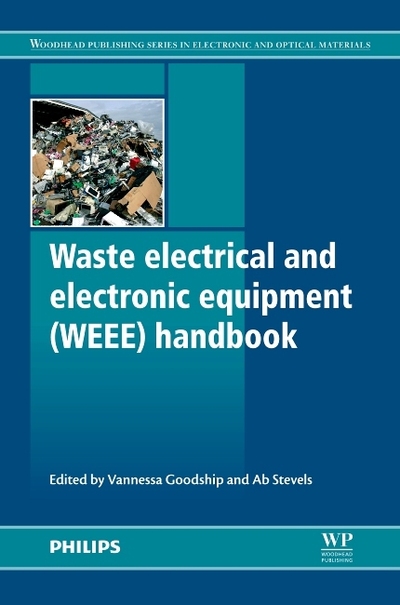
Electrical and electronic waste is a growing problem as volumes are increasing fast. Rapid product innovation and replacement, especially in information and communication technologies (ICT), combined with the migration from analog to digital technologies and to flat-screen televisions and monitors has resulted in some electronic products quickly reaching the end of their life. The EU directive on waste electrical and electronic equipment (WEEE) aims to minimise WEEE by putting organizational and financial responsibility on producers and distributors for collection, treatment, recycling and recovery of WEEE. Therefore all stakeholders need to be well-informed about their WEEE responsibilities and options. While focussing on the EU, this book draws lessons for policy and practice from all over the world.Part one introduces the reader to legislation and initiatives to manage WEEE. Part two discusses technologies for the refurbishment, treatment and recycling of waste electronics. Part three focuses on electronic products that present particular challenges for recyclers. Part four explores sustainable design of electronics and supply chains. Part five discusses national and regional WEEE management schemes and part six looks at corporate WEEE management strategies.With an authoritative collection of chapters from an international team of authors, Waste electrical and electronic equipment (WEEE) handbook is designed to be used as a reference by policy-makers, producers and treatment operators in both the developed and developing world.
| ISBN: | 9780857090898 |
| Publication date: | 30th August 2012 |
| Author: | Vannessa Goodship, Ab Stevels |
| Publisher: | Woodhead Publishing an imprint of Elsevier Science |
| Format: | Hardback |
| Pagination: | 724 pages |
| Series: | Woodhead Publishing Series in Electronic and Optical Materials |
| Genres: |
Administrative jurisdiction and public administration Environment law Waste treatment and disposal Environmental science, engineering and technology |
Electrical and electronic waste is a growing problem as volumes are increasing fast. Rapid product innovation and replacement, especially in information and communication technologies (ICT), combined with the migration from analog to digital technologies and to flat-screen televisions and monitors has resulted in some electronic products quickly reaching the end of their life. The EU directive on waste electrical and electronic equipment (WEEE) aims to minimise WEEE by putting organizational and financial responsibility on producers and distributors for collection, treatment, recycling and recovery of WEEE. Therefore all stakeholders need to be well-informed about their WEEE responsibilities and options. While focussing on the EU, this book draws lessons for policy and practice from all over the world.Part one introduces the reader to legislation and initiatives to manage WEEE. Part two discusses technologies for the refurbishment, treatment and recycling of waste electronics. Part three focuses on electronic products that present particular challenges for recyclers. Part four explores sustainable design of electronics and supply chains. Part five discusses national and regional WEEE management schemes and part six looks at corporate WEEE management strategies.With an authoritative collection of chapters from an international team of authors, Waste electrical and electronic equipment (WEEE) handbook is designed to be used as a reference by policy-makers, producers and treatment operators in both the developed and developing world.
Waste Electrical and Electronic Equipment (WEEE) Handbook features in the following genres: Administrative jurisdiction and public administration, Environment law, Waste treatment and disposal, Environmental science, engineering and technology
Waste Electrical and Electronic Equipment (WEEE) Handbook is available in Hardback
Waste Electrical and Electronic Equipment (WEEE) Handbook was written by Vannessa Goodship, Ab Stevels and published by Woodhead Publishing an imprint of Elsevier Science
Waste Electrical and Electronic Equipment (WEEE) Handbook has 724 pages
Yes it is part of Woodhead Publishing Series in Electronic and Optical Materials series