

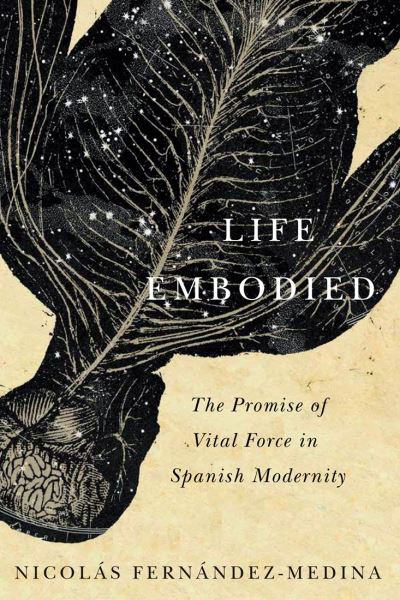
The concept of vital force - the immanent energy that promotes the processes of life in the body and in nature - has proved a source of endless fascination and controversy. Indeed, the question of what vitalizes the body has haunted humanity since antiquity, and became even more pressing during the Scientific Revolution and beyond. Examining the complexities and theories about vital force in Spanish modernity, Nicolás Fernández-Medina's Life Embodied offers a novel and provocative assessment of the question of bodily life in Spain.
Starting with Juan de Cabriada's landmark Carta filosófica, médico-chymica of 1687 and ending with Ramón Gómez de la Serna's avant-gardism of the 1910s, Fernández-Medina incorporates discussions of anatomy, philosophy, science, critical theory, history of medicine, and literary studies to argue that concepts of vital force served as powerful vehicles to interrogate the possibilities and limits of corporeality. Paying close attention to how the body's capabilities were conceived and strategically woven into critiques of modernity, Fernández-Medina engages the work of Miguel Boix y Moliner, Martìn Martìnez, Diego de Torres Villarroel, Sebastián Guerrero Herreros, Ignacio Marìa Ruiz de Luzuriaga, Gaspar Melchor de Jovellanos, Pedro Mata y Fontanet, ¦ngela Grassi, Julián Sanz del Rìo, Miguel de Unamuno, and Pìo Baroja, among others.
Drawing on extensive research and analysis, Life Embodied breaks new ground as the first book to address the question of vital force in Spanish modernity.
| ISBN: | 9780773553378 |
| Publication date: | 30th May 2018 |
| Author: | Nicolás FernándezMedina |
| Publisher: | McGill-Queen's University Press |
| Format: | Paperback |
| Pagination: | 416 pages |
| Series: | McGill-Queen's Studies in the History of Ideas |
| Genres: |
European history Philosophy |
The concept of vital force - the immanent energy that promotes the processes of life in the body and in nature - has proved a source of endless fascination and controversy. Indeed, the question of what vitalizes the body has haunted humanity since antiquity, and became even more pressing during the Scientific Revolution and beyond.
Life Embodied features in the following genres: European history, Philosophy
Hardback, Paperback. Not Available.
Life Embodied was written by Nicolás FernándezMedina and published by McGill-Queen's University Press
Life Embodied has 416 pages
Yes it is part of McGill-Queen's Studies in the History of Ideas series