

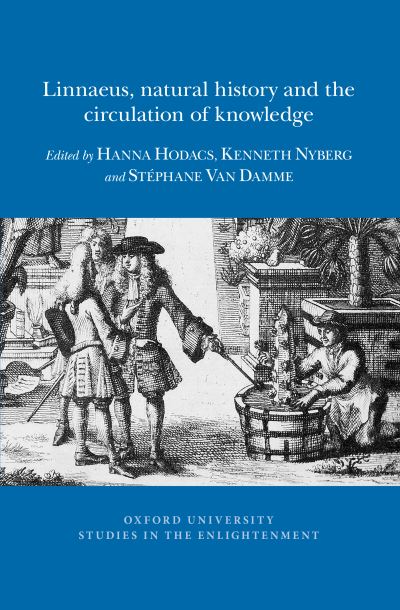
The name of Carl Linnaeus (1707-1778) is inscribed in almost every flora and fauna published from the mid-eighteenth century onwards; in this respect he is virtually immortal. In this book a group of specialists argue for the need to re-centre Linnaean science and de-centre Linnaeus the man by exploring the ideas, practices and people connected to his taxonomic innovations.
Contributors examine the various techniques, materials and methods that originated within the 'Linnaean workshop': paper technologies, publication strategies, and markets for specimens. Fresh analyses of the reception of Linnaeus's work in Paris, Königsberg, Edinburgh and beyond offer a window on the local contexts of knowledge transfer, including new perspectives on the history of anthropology and stadial theory. The global implications and negotiated nature of these intellectual, social and material developments are further investigated in chapters tracing the experiences and encounters of Linnaean travellers in Africa, Latin America and South Asia.
Through focusing on the circulation of Linnaean knowledge and placing it within the context of eighteenth-century globalization, authors provide innovative and important contributions to our understanding of the early modern history of science.
| ISBN: | 9780729412056 |
| Publication date: | 31st January 2018 |
| Author: | Hanna Hodacs, Kenneth Nyberg, Stéphane van Damme |
| Publisher: | Voltaire Foundation |
| Format: | Paperback |
| Pagination: | 300 pages |
| Series: | Oxford University Studies in the Enlightenment |
| Genres: |
History of science Literary studies: c 1600 to c 1800 The Earth: natural history: general interest |
The name of Carl Linnaeus (1707-1778) is inscribed in almost every flora and fauna published from the mid-eighteenth century onwards; in this respect he is virtually immortal. In this book a group of specialists argue for the need to re-centre Linnaean science and de-centre Linnaeus the man by exploring the ideas, practices and people connected to his taxonomic innovations.
Contributors examine the various techniques, materials and methods that originated within the 'Linnaean workshop': paper technologies, publication strategies, and markets for specimens. Fresh analyses of the reception of Linnaeus's work in Paris, Königsberg, Edinburgh and beyond offer a window on the local contexts of knowledge transfer, including new perspectives on the history of anthropology and stadial theory. The global implications and negotiated nature of these intellectual, social and material developments are further investigated in chapters tracing the experiences and encounters of Linnaean travellers in Africa, Latin America and South Asia.
Through focusing on the circulation of Linnaean knowledge and placing it within the context of eighteenth-century globalization, authors provide innovative and important contributions to our understanding of the early modern history of science.
Linnaeus, Natural History and the Circulation of Knowledge features in the following genres: History of science, Literary studies: c 1600 to c 1800, The Earth: natural history: general interest
Linnaeus, Natural History and the Circulation of Knowledge is available in Paperback
Linnaeus, Natural History and the Circulation of Knowledge was written by Hanna Hodacs, Kenneth Nyberg, Stéphane van Damme and published by Voltaire Foundation
Linnaeus, Natural History and the Circulation of Knowledge has 300 pages
Yes it is part of Oxford University Studies in the Enlightenment series