

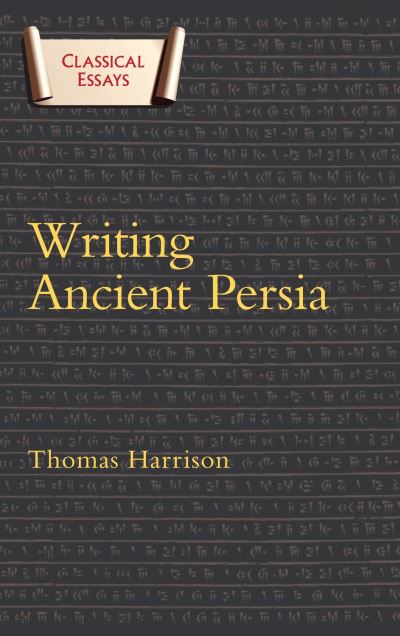
This is a critique of this new Achaemenid historiography, concentrating on the difficulties of using Greek sources for the writing of Persian history. The history of Achaemenid Persia - the empire of Cyrus the Great, Darius and Xerxes - has largely been rewritten in the last thirty years by an international group of scholars. Inspired by new sources of information, and by a determination to see Persia in its own terms, historians have created a powerful new image of the Persian Empire: tightly organised and resilient, tolerant towards the religions and cultures of its subject peoples, and with kings and queens whose concerns were pragmatic rather than whimsically despotic.
It argues that excising Greek bias (if it is possible at all) should be seen to be a much more complex procedure. The book examines two themes in detail: the representation of the Kings and Queens (in Greek sources and in recent histories of Persia), and the accounts given of the Persian Wars and the conquests of Alexander. Persian evidence points to a significantly less rosy image of Persian imperialism. And past writers on Achaemenid Persia, far from rejecting it as the mirror image and enemy of the Greeks, frequently traced its influence on the classical Greco-Roman world, and identified strongly with Persia as a model.
| ISBN: | 9780715639177 |
| Publication date: | 27th January 2011 |
| Author: | Thomas Harrison |
| Publisher: | Bristol Classical Press an imprint of Bloomsbury Publishing (UK) |
| Format: | Paperback |
| Pagination: | 190 pages |
| Series: | Classical Essays |
| Genres: |
Ancient history Historiography Asian history |
This is a critique of this new Achaemenid historiography, concentrating on the difficulties of using Greek sources for the writing of Persian history. The history of Achaemenid Persia - the empire of Cyrus the Great, Darius and Xerxes - has largely been rewritten in the last thirty years by an international group of scholars. Inspired by new sources of information, and by a determination to see Persia in its own terms, historians have created a powerful new image of the Persian Empire: tightly organised and resilient, tolerant towards the religions and cultures of its subject peoples, and with kings and queens whose concerns were pragmatic rather than whimsically despotic.
It argues that excising Greek bias (if it is possible at all) should be seen to be a much more complex procedure. The book examines two themes in detail: the representation of the Kings and Queens (in Greek sources and in recent histories of Persia), and the accounts given of the Persian Wars and the conquests of Alexander. Persian evidence points to a significantly less rosy image of Persian imperialism. And past writers on Achaemenid Persia, far from rejecting it as the mirror image and enemy of the Greeks, frequently traced its influence on the classical Greco-Roman world, and identified strongly with Persia as a model.
Writing Ancient Persia features in the following genres: Ancient history, Historiography, Asian history
Writing Ancient Persia is available in Paperback
Writing Ancient Persia was written by Thomas Harrison and published by Bristol Classical Press an imprint of Bloomsbury Publishing (UK)
Writing Ancient Persia has 190 pages
Yes it is part of Classical Essays series
£21.59