

Why Britain's attempt at small government proved unable to cope with the challenges of the modern world
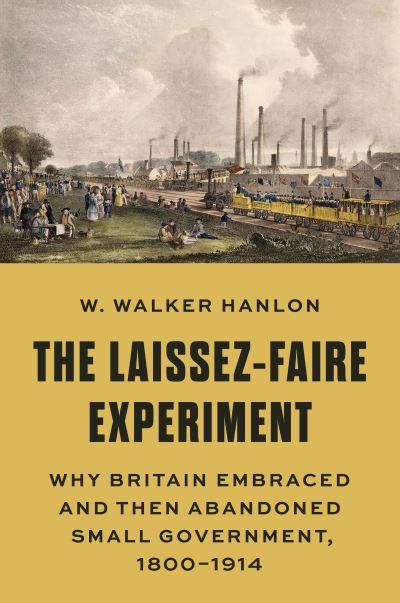
In the nineteenth century, as Britain attained a leading economic and political position in Europe, British policymakers embarked on a bold experiment with small and limited government. By the outbreak of the First World War, however, this laissez-faire philosophy of government had been abandoned and the country had taken its first steps toward becoming a modern welfare state. This book tells the story of Britain's laissez-faire experiment, examining why it was done, how it functioned, and why it was ultimately rejected in favor of a more interventionist form of governance.
Blending insights from modern economic theory with a wealth of historical evidence, W. Walker Hanlon traces the slow expansion of government intervention across a broad spectrum of government functions in order to understand why and how Britain gave up on laissez-faire. It was not abandoned because Britain's leaders lost faith in small government as some have suggested, nor did it collapse under the growing influence of working-class political power. Instead, Britain's move away from small government was a pragmatic and piecemeal response-by policymakers who often deeply believed in laissez-faire-to the economic forces unleashed by the Industrial Revolution.
| ISBN: | 9780691213415 |
| Publication date: | 5th November 2024 |
| Author: | W Walker Hanlon |
| Publisher: | Princeton University Press |
| Format: | Hardback |
| Pagination: | 504 pages |
| Series: | The Princeton Economic History of the Western World |
| Genres: |
Economic history Capitalism Globalization Economic theory and philosophy |
Why Britain's attempt at small government proved unable to cope with the challenges of the modern world
In the nineteenth century, as Britain attained a leading economic and political position in Europe, British policymakers embarked on a bold experiment with small and limited government. By the outbreak of the First World War, however, this laissez-faire philosophy of government had been abandoned and the country had taken its first steps toward becoming a modern welfare state. This book tells the story of Britain's laissez-faire experiment, examining why it was done, how it functioned, and why it was ultimately rejected in favor of a more interventionist form of governance.
Blending insights from modern economic theory with a wealth of historical evidence, W. Walker Hanlon traces the slow expansion of government intervention across a broad spectrum of government functions in order to understand why and how Britain gave up on laissez-faire. It was not abandoned because Britain's leaders lost faith in small government as some have suggested, nor did it collapse under the growing influence of working-class political power. Instead, Britain's move away from small government was a pragmatic and piecemeal response-by policymakers who often deeply believed in laissez-faire-to the economic forces unleashed by the Industrial Revolution.
The Laissez-Faire Experiment features in the following genres: Economic history, Capitalism, Globalization, Economic theory and philosophy
The Laissez-Faire Experiment is available in Hardback
The Laissez-Faire Experiment was written by W Walker Hanlon and published by Princeton University Press
The Laissez-Faire Experiment has 504 pages
Yes it is part of The Princeton Economic History of the Western World series
£37.80