

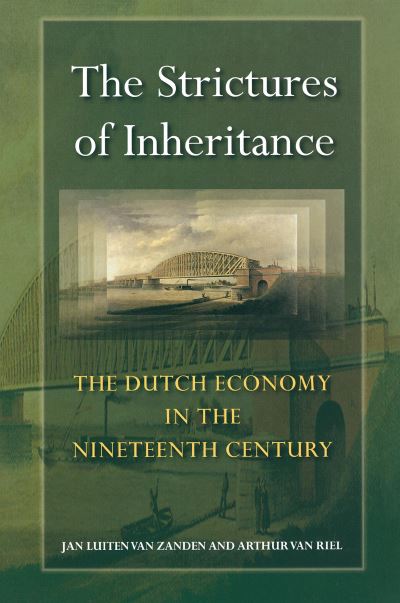
A major feat of research and synthesis, this book presents the first comprehensive history of the Dutch economy in the nineteenth century--an important but poorly understood piece of European economic history. Based on a detailed reconstruction of extensive economic data, the authors account for demise of the Dutch economy's golden age. After showing how institutional factors combined to make the Dutch economy a victim of its own success, the book traces its subsequent emergence as a modern industrial economy.
Between 1780 and 1914, the Netherlands went through a double transition. Its economy--which, in the words of Adam Smith, was approaching a "stationary state" in the eighteenth century--entered a process of modern economic growth during the middle decades of the nineteenth. At the same time, the country's sociopolitical structure was undergoing radical transformation as the decentralized polity of the republic gave way to a unitary state. As the authors show, the dramatic transformation of the Dutch political structure was intertwined with equally radical changes in the institutional structure of the economy. The outcome of this dual transition was a rapidly industrializing economy on one side and, on the other, the neocorporatist sociopolitical structure that would characterize the Netherlands in the twentieth century.
Analyzing both processes with a focus on institutional change, this book argues that the economic and political development of the Netherlands can be understood only in tandem.
| ISBN: | 9780691114385 |
| Publication date: | 11th May 2004 |
| Author: | J L van Zanden, Arthur van Riel |
| Publisher: | Princeton University Press |
| Format: | Hardback |
| Pagination: | 416 pages |
| Series: | The Princeton Economic History of the Western World |
| Genres: |
Economic history European history |
A major feat of research and synthesis, this book presents the first comprehensive history of the Dutch economy in the nineteenth century--an important but poorly understood piece of European economic history. Based on a detailed reconstruction of extensive economic data, the authors account for demise of the Dutch economy's golden age. After showing how institutional factors combined to make the Dutch economy a victim of its own success, the book traces its subsequent emergence as a modern industrial economy.
Between 1780 and 1914, the Netherlands went through a double transition. Its economy--which, in the words of Adam Smith, was approaching a "stationary state" in the eighteenth century--entered a process of modern economic growth during the middle decades of the nineteenth. At the same time, the country's sociopolitical structure was undergoing radical transformation as the decentralized polity of the republic gave way to a unitary state. As the authors show, the dramatic transformation of the Dutch political structure was intertwined with equally radical changes in the institutional structure of the economy. The outcome of this dual transition was a rapidly industrializing economy on one side and, on the other, the neocorporatist sociopolitical structure that would characterize the Netherlands in the twentieth century.
Analyzing both processes with a focus on institutional change, this book argues that the economic and political development of the Netherlands can be understood only in tandem.
The Strictures of Inheritance features in the following genres: Economic history, European history
The Strictures of Inheritance is available in Hardback
The Strictures of Inheritance was written by J L van Zanden, Arthur van Riel and published by Princeton University Press
The Strictures of Inheritance has 416 pages
Yes it is part of The Princeton Economic History of the Western World series