

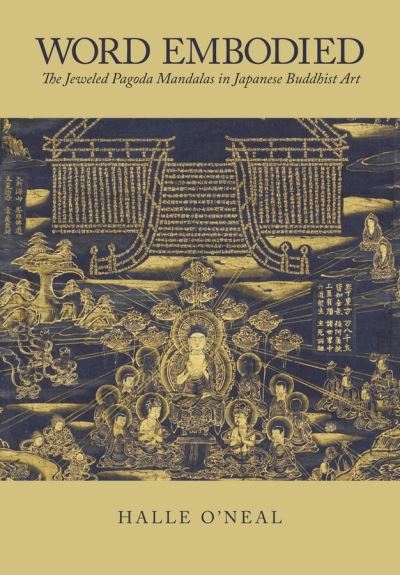
In this study of the Japanese jeweled pagoda mandalas, Halle O'Neal reveals the entangled realms of sacred body, beauty, and salvation. Much of the previous scholarship on these paintings concentrates on formal analysis and iconographic study of their narrative vignettes. This has marginalized the intriguing interplay of text and image at their heart, precluding a holistic understanding of the mandalas and diluting their full import in Buddhist visual culture. Word Embodied offers an alternative methodology, developing interdisciplinary insights into the social, religious, and artistic implications of this provocative entwining of word and image.
O'Neal unpacks the paintings' revolutionary use of text as picture to show how this visual conflation mirrors important conceptual indivisibilities in medieval Japan. The textual pagoda projects the complex constellation of relics, reliquaries, scripture, and body in religious doctrine, practice, and art. Word Embodied also expands our thinking about the demands of viewing, recasting the audience as active producers of meaning and offering a novel perspective on disciplinary discussions of word and image that often presuppose an ontological divide between them. This examination of the jeweled pagoda mandalas, therefore, recovers crucial dynamics underlying Japanese Buddhist art, including invisibility, performative viewing, and the spectacular visualizations of embodiment.
| ISBN: | 9780674983861 |
| Publication date: | 31st August 2018 |
| Author: | Halle ONeal |
| Publisher: | Harvard University Asia Center an imprint of Harvard University Press |
| Format: | Hardback |
| Pagination: | 310 pages |
| Series: | Harvard East Asian Monographs |
| Genres: |
History of art Asian history History of religion Buddhism |
In this study of the Japanese jeweled pagoda mandalas, Halle O'Neal reveals the entangled realms of sacred body, beauty, and salvation. Much of the previous scholarship on these paintings concentrates on formal analysis and iconographic study of their narrative vignettes. This has marginalized the intriguing interplay of text and image at their heart, precluding a holistic understanding of the mandalas and diluting their full import in Buddhist visual culture. Word Embodied offers an alternative methodology, developing interdisciplinary insights into the social, religious, and artistic implications of this provocative entwining of word and image.
O'Neal unpacks the paintings' revolutionary use of text as picture to show how this visual conflation mirrors important conceptual indivisibilities in medieval Japan. The textual pagoda projects the complex constellation of relics, reliquaries, scripture, and body in religious doctrine, practice, and art. Word Embodied also expands our thinking about the demands of viewing, recasting the audience as active producers of meaning and offering a novel perspective on disciplinary discussions of word and image that often presuppose an ontological divide between them. This examination of the jeweled pagoda mandalas, therefore, recovers crucial dynamics underlying Japanese Buddhist art, including invisibility, performative viewing, and the spectacular visualizations of embodiment.
Word Embodied features in the following genres: History of art, Asian history, History of religion, Buddhism
Word Embodied is available in Hardback
Word Embodied was written by Halle ONeal and published by Harvard University Asia Center an imprint of Harvard University Press
Word Embodied has 310 pages
Yes it is part of Harvard East Asian Monographs series
£56.66