

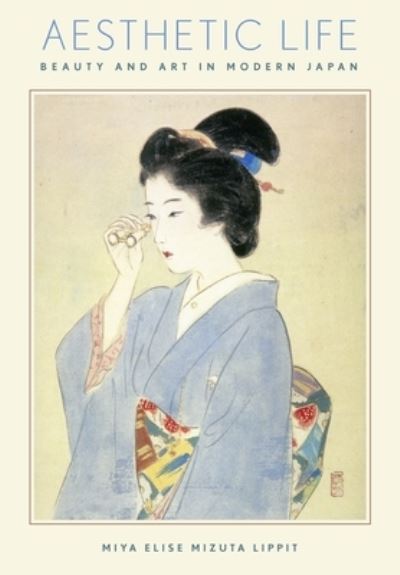
This study of modern Japan engages the fields of art history, literature, and cultural studies, seeking to understand how the "beautiful woman" (bijin) emerged as a symbol of Japanese culture during the Meiji period (1868-1912). With origins in the formative period of modern Japanese art and aesthetics, the figure of the bijin appeared across a broad range of visual and textual media: photographs, illustrations, prints, and literary works, as well as fictional, critical, and journalistic writing. It eventually constituted a genre of painting called bijinga (paintings of beauties).
Aesthetic Life examines the contributions of writers, artists, scholars, critics, journalists, and politicians to the discussion of the bijin and to the production of a national discourse on standards of Japanese beauty and art. As Japan worked to establish its place in the world, it actively presented itself as an artistic nation based on these ideals of feminine beauty. The book explores this exemplary figure for modern Japanese aesthetics and analyzes how the deceptively ordinary image of the beautiful Japanese woman-an iconic image that persists to this day-was cultivated as a "national treasure," synonymous with Japanese culture.
| ISBN: | 9780674975163 |
| Publication date: | 22nd February 2019 |
| Author: | Miya Elise Mizuta Lippit |
| Publisher: | Harvard University Asia Center an imprint of Harvard University Press |
| Format: | Hardback |
| Pagination: | 332 pages |
| Series: | Harvard East Asian Monographs |
| Genres: |
Asian history History of art Literature: history and criticism Philosophy: aesthetics |
This study of modern Japan engages the fields of art history, literature, and cultural studies, seeking to understand how the "beautiful woman" (bijin) emerged as a symbol of Japanese culture during the Meiji period (1868-1912). With origins in the formative period of modern Japanese art and aesthetics, the figure of the bijin appeared across a broad range of visual and textual media: photographs, illustrations, prints, and literary works, as well as fictional, critical, and journalistic writing. It eventually constituted a genre of painting called bijinga (paintings of beauties).
Aesthetic Life examines the contributions of writers, artists, scholars, critics, journalists, and politicians to the discussion of the bijin and to the production of a national discourse on standards of Japanese beauty and art. As Japan worked to establish its place in the world, it actively presented itself as an artistic nation based on these ideals of feminine beauty. The book explores this exemplary figure for modern Japanese aesthetics and analyzes how the deceptively ordinary image of the beautiful Japanese woman-an iconic image that persists to this day-was cultivated as a "national treasure," synonymous with Japanese culture.
Aesthetic Life features in the following genres: Asian history, History of art, Literature: history and criticism, Philosophy: aesthetics
Aesthetic Life is available in Hardback, Paperback
Aesthetic Life was written by Miya Elise Mizuta Lippit and published by Harvard University Asia Center an imprint of Harvard University Press
Aesthetic Life has 332 pages
Yes it is part of Harvard East Asian Monographs series