

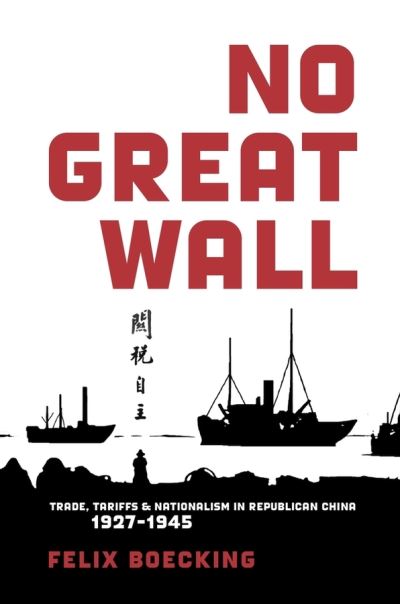
This book, an in-depth study of Nationalist tariff policy, fundamentally challenges the widely accepted idea that the key to the Communist seizure of power in China lay in the incompetence of Chiang Kai-shek's Nationalist government. It argues instead that during the second Sino-Japanese War, China's international trade, the Nationalist government's tariff revenues, and hence its fiscal policy and state-making project all collapsed.
Because tariffs on China's international trade produced the single greatest share of central government revenue during the Nanjing decade, the political existence of the Nationalist government depended on tariff revenue. Therefore, Chinese economic nationalism, both at the official and popular levels, had to be managed carefully so as not to jeopardize the Nationalist government's income. Until the outbreak of war in 1937, the Nationalists' management of international trade and China's government finances was largely successful in terms of producing increasing and sustainable revenues. Within the first year of war, however, the Nationalists lost territories producing 80 percent of tariff revenue. Hence, government revenue declined just as war-related expenditure increased, and the Nationalist government had to resort to more rapacious forms of revenue extraction-a decision that had disastrous consequences for both its finances and its political viability.
| ISBN: | 9780674970601 |
| Publication date: | 28th July 2017 |
| Author: | Felix Boecking |
| Publisher: | Harvard University Asia Center an imprint of Harvard University Press |
| Format: | Hardback |
| Pagination: | 292 pages |
| Series: | Harvard East Asian Monographs |
| Genres: |
Asian history History and Archaeology Political science and theory |
This book, an in-depth study of Nationalist tariff policy, fundamentally challenges the widely accepted idea that the key to the Communist seizure of power in China lay in the incompetence of Chiang Kai-shek's Nationalist government. It argues instead that during the second Sino-Japanese War, China's international trade, the Nationalist government's tariff revenues, and hence its fiscal policy and state-making project all collapsed.
Because tariffs on China's international trade produced the single greatest share of central government revenue during the Nanjing decade, the political existence of the Nationalist government depended on tariff revenue. Therefore, Chinese economic nationalism, both at the official and popular levels, had to be managed carefully so as not to jeopardize the Nationalist government's income. Until the outbreak of war in 1937, the Nationalists' management of international trade and China's government finances was largely successful in terms of producing increasing and sustainable revenues. Within the first year of war, however, the Nationalists lost territories producing 80 percent of tariff revenue. Hence, government revenue declined just as war-related expenditure increased, and the Nationalist government had to resort to more rapacious forms of revenue extraction-a decision that had disastrous consequences for both its finances and its political viability.
No Great Wall features in the following genres: Asian history, History and Archaeology, Political science and theory
No Great Wall is available in Hardback
No Great Wall was written by Felix Boecking and published by Harvard University Asia Center an imprint of Harvard University Press
No Great Wall has 292 pages
Yes it is part of Harvard East Asian Monographs series
£30.56