

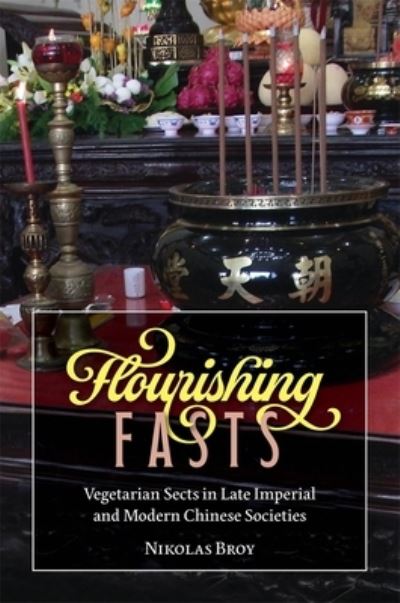
Flourishing Fasts is the first book in any language to explore the history of the Zhaijiao, commonly translated as "vegetarian sects," that originated in southeastern China during the Ming and Qing dynasties and are still active in contemporary Taiwan. Combining historical analysis and ethnographic fieldwork, Nikolas Broy reveals the entangled nature of the Zhaijiao-and other Chinese sectarian groups-within their socioreligious environment. Conventionally considered nonconformist dissenters or lay Buddhists, the Zhaijiao in fact embody one intersection of the "Three Teachings" of Buddhism, Daoism, and Confucianism and manifest aspects of local religious life and universal salvationist teachings. Not limited to everyday religious rites such as worshiping local gods, conducting initiation festivals, and performing ritual services for nonmembers, the Zhaijiao also serve as institutions around which social and political life are centered-for example through mobilizing local resources for public enterprises or articulating property rights vis-à-vis the state.
In this wide-ranging discussion that covers practices, religious symbols and teachings, mythological narratives, moral values, architecture, and material culture over more than four hundred years, Broy situates the Zhaijiao at the very core of local societies and shows how they actively engage in political, economic, legal, and cultural affairs.
| ISBN: | 9780674302532 |
| Publication date: | 12th December 2025 |
| Author: | Nikolas Broy |
| Publisher: | Harvard University Asia Center an imprint of Harvard University Press |
| Format: | Hardback |
| Pagination: | 494 pages |
| Series: | Harvard-Yenching Institute Monograph Series |
| Genres: |
East Asian religions Religious life and practice Religious and theocratic ideologies Vegetarian Cookery and vegetarianism |
Flourishing Fasts is the first book in any language to explore the history of the Zhaijiao, commonly translated as "vegetarian sects," that originated in southeastern China during the Ming and Qing dynasties and are still active in contemporary Taiwan. Combining historical analysis and ethnographic fieldwork, Nikolas Broy reveals the entangled nature of the Zhaijiao-and other Chinese sectarian groups-within their socioreligious environment.
Flourishing Fasts features in the following genres: East Asian religions, Religious life and practice, Religious and theocratic ideologies, Vegetarian Cookery and vegetarianism
Hardback. £54.86, down from the £60.95 cover price. Not Available.
Flourishing Fasts was written by Nikolas Broy and published by Harvard University Asia Center an imprint of Harvard University Press
Flourishing Fasts has 494 pages
Yes it is part of Harvard-Yenching Institute Monograph Series series
£54.86, reduced from £60.95. Not Available.