

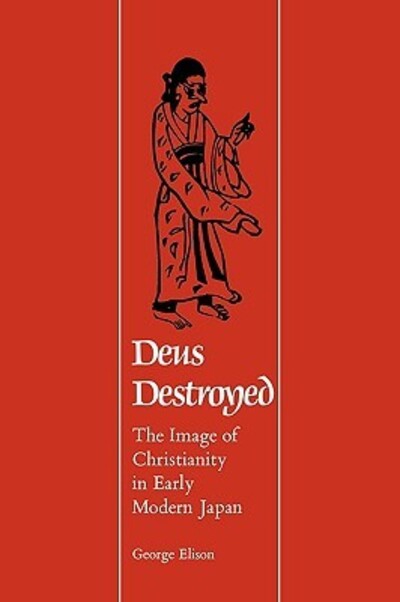
Japan's "Christian Century" began in 1549 with the arrival of Jesuit missionaries led by Saint Francis Xavier, and ended in 1639 when the Tokugawa regime issued the final Sakoku Edict prohibiting all traffic with Catholic lands. "Sakoku"-national isolation-would for more than two centuries be the sum total of the regime's approach to foreign affairs. This policy was accompanied by the persecution of Christians inside Japan, a course of action for which the missionaries and their zealots were in part responsible because of their dogmatic orthodoxy. The Christians insisted that "Deus" was owed supreme loyalty, while the Tokugawa critics insisted on the prior importance of performing one's role within the secular order, and denounced the subversive doctrine whose First Commandment seemed to permit rebellion against the state.
In discussing the collision of ideas and historical processes, George Elison explores the attitudes and procedures of the missionaries, describes the entanglements in politics that contributed heavily to their doom, and shows the many levels of the Japanese response to Christianity. Central to his book are translations of four seventeenth-century, anti-Christian polemical tracts.
| ISBN: | 9780674199620 |
| Publication date: | 1st July 1988 |
| Author: | George Elison |
| Publisher: | Harvard University Asia Center an imprint of Harvard University Press |
| Format: | Paperback |
| Pagination: | 542 pages |
| Series: | Harvard East Asian Monographs |
| Genres: |
Geography |
Japan's "Christian Century" began in 1549 with the arrival of Jesuit missionaries led by Saint Francis Xavier, and ended in 1639 when the Tokugawa regime issued the final Sakoku Edict prohibiting all traffic with Catholic lands. "Sakoku"-national isolation-would for more than two centuries be the sum total of the regime's approach to foreign affairs.
Deus Destroyed features in the following genres: Geography
Paperback. Not Available.
Deus Destroyed was written by George Elison and published by Harvard University Asia Center an imprint of Harvard University Press
Deus Destroyed has 542 pages
Yes it is part of Harvard East Asian Monographs series