

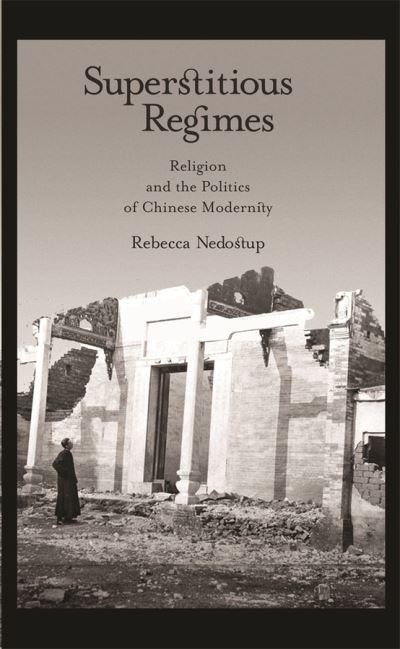
We live in a world shaped by secularism-the separation of numinous power from political authority and religion from the political, social, and economic realms of public life. Not only has progress toward modernity often been equated with secularization, but when religion is admitted into modernity, it has been distinguished from superstition. That such ideas are continually contested does not undercut their extraordinary influence.
These divisions underpin this investigation of the role of religion in the construction of modernity and political power during the Nanjing Decade (1927-1937) of Nationalist rule in China. This book explores the modern recategorization of religious practices and people and examines how state power affected the religious lives and physical order of local communities. It also looks at how politicians conceived of their own ritual role in an era when authority was meant to derive from popular sovereignty. The claims of secular nationalism and mobilizational politics prompted the Nationalists to conceive of the world of religious association as a dangerous realm of "superstition" that would destroy the nation. This is the first "superstitious regime" of the book's title. It also convinced them that national feeling and faith in the party-state would replace those ties-the second "superstitious regime."
| ISBN: | 9780674035997 |
| Publication date: | 2nd March 2010 |
| Author: | Rebecca Nedostup, Harvard University |
| Publisher: | Harvard University Asia Center an imprint of Harvard University Press |
| Format: | Hardback |
| Pagination: | 459 pages |
| Series: | Harvard East Asian Monographs |
| Genres: |
Geography |
We live in a world shaped by secularism-the separation of numinous power from political authority and religion from the political, social, and economic realms of public life. Not only has progress toward modernity often been equated with secularization, but when religion is admitted into modernity, it has been distinguished from superstition. That such ideas are continually contested does not undercut their extraordinary influence.
These divisions underpin this investigation of the role of religion in the construction of modernity and political power during the Nanjing Decade (1927-1937) of Nationalist rule in China. This book explores the modern recategorization of religious practices and people and examines how state power affected the religious lives and physical order of local communities. It also looks at how politicians conceived of their own ritual role in an era when authority was meant to derive from popular sovereignty. The claims of secular nationalism and mobilizational politics prompted the Nationalists to conceive of the world of religious association as a dangerous realm of "superstition" that would destroy the nation. This is the first "superstitious regime" of the book's title. It also convinced them that national feeling and faith in the party-state would replace those ties-the second "superstitious regime."
Superstitious Regimes features in the following genres: Geography
Superstitious Regimes is available in Hardback
Superstitious Regimes was written by Rebecca Nedostup, Harvard University and published by Harvard University Asia Center an imprint of Harvard University Press
Superstitious Regimes has 459 pages
Yes it is part of Harvard East Asian Monographs series