

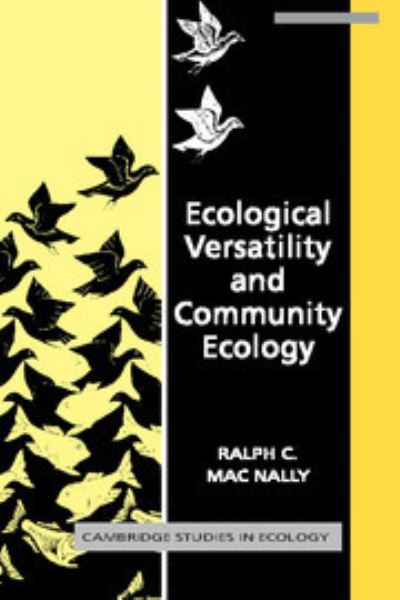
This book was first published in 1995, a time when, like today, there were mounting concerns that the management of our natural global heritage was failing to arrest the rapid loss of biodiversity. The problem may be traced to the extinction of enormous numbers of 'specialised' species, especially in the tropics. Tropical species either have highly particular resource requirements, such as food or nesting hollows, or specific needs for certain types of habitat, such as wetlands, making them vulnerable to changing global conditions.
This book is about specialisation and generalisation in the use of resources and habitats. The author uses a broad ecological perspective to address three main questions. How do ecologists study variation in resource and habitat use, and what do we know from these studies?
How well does theory account for observations, and what are the common threads between disciplines? Finally, what is the relationship between resource and habitat use? This book provides a comprehensive analysis of ecological versatility.
| ISBN: | 9780521405539 |
| Publication date: | 21st September 1995 |
| Author: | Ralph C Mac Nally |
| Publisher: | Cambridge University Press |
| Format: | Hardback |
| Pagination: | 435 pages |
| Series: | Cambridge Studies in Ecology |
| Genres: |
Ecological science, the Biosphere |
This book was first published in 1995, a time when, like today, there were mounting concerns that the management of our natural global heritage was failing to arrest the rapid loss of biodiversity. The problem may be traced to the extinction of enormous numbers of 'specialised' species, especially in the tropics.
Ecological Versatility and Community Ecology features in the following genres: Ecological science, the Biosphere
Hardback. Not Available.
Ecological Versatility and Community Ecology was written by Ralph C Mac Nally and published by Cambridge University Press
Ecological Versatility and Community Ecology has 435 pages
Yes it is part of Cambridge Studies in Ecology series