

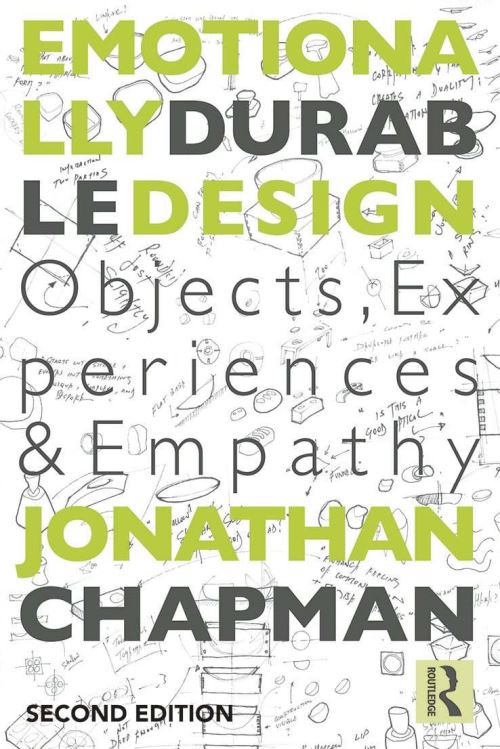
Emotionally Durable Design presents counterpoints to our 'throwaway society' by developing powerful design tools, methods and frameworks that build resilience into relationships between people and things. The book takes us beyond the sustainable design field's established focus on energy and materials, to engage the underlying psychological phenomena that shape patterns of consumption and waste.
In fluid and accessible writing, the author asks: why do we discard products that still work? He then moves forward to define strategies for the design of products that people want to keep for longer. Along the way we are introduced to over twenty examples of emotional durability in smart phones, shoes, chairs, clocks, teacups, toasters, boats and other material experiences.
Emotionally Durable Design transcends the prevailing doom and gloom rhetoric of sustainability discourse, to pioneer a more hopeful, meaningful and resilient form of material culture. This second edition features pull-out quotes, illustrated product examples, a running glossary and comprehensive stand firsts; this book can be read cover to cover, or dipped in-and-out of. It is a daring call to arms for professional designers, educators, researchers and students from in a range of disciplines from product design to architecture; framing an alternative genre of design that reduces the consumption and waste of resources by increasing the durability of relationships between people and things.
| ISBN: | 9780415732154 |
| Publication date: | 28th May 2015 |
| Author: | Jonathan Chapman |
| Publisher: | Routledge an imprint of Taylor & Francis |
| Format: | Paperback |
| Pagination: | 224 pages |
| Genres: |
Product design Sustainability Psychology |
Emotionally Durable Design presents counterpoints to our 'throwaway society' by developing powerful design tools, methods and frameworks that build resilience into relationships between people and things. The book takes us beyond the sustainable design field's established focus on energy and materials, to engage the underlying psychological phenomena that shape patterns of consumption and waste.In fluid and accessible writing, the author asks: why do we discard products that still work?
Emotionally Durable Design features in the following genres: Product design, Sustainability, Psychology
Hardback, Paperback, Ebook. £45.89, down from the £50.99 cover price. Not Available.
Emotionally Durable Design was written by Jonathan Chapman and published by Routledge an imprint of Taylor & Francis
Emotionally Durable Design has 224 pages
£45.89, reduced from £50.99. Not Available.