

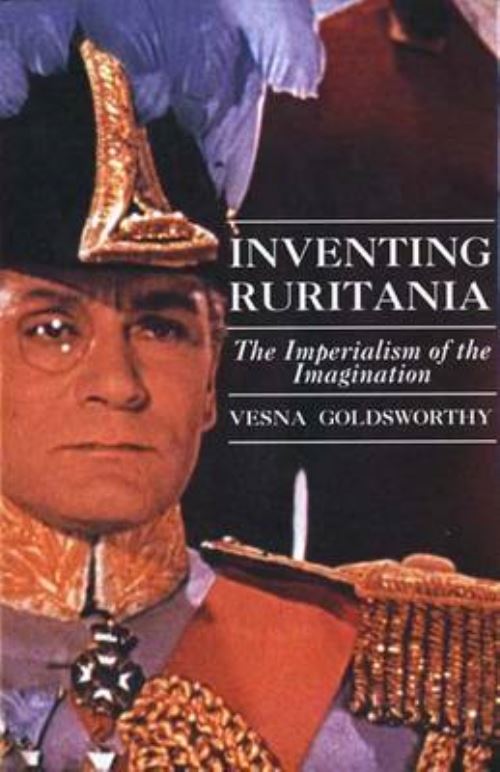
Since the 1800s, the Balkans - the "Wild East" of Europe - have offered material for the literature and the entertainment industries in Western Europe and America. In this process of imaginative colonization, products developed in the West - lands such as Bram Stoker's Transylvania (in "Dracula") and Anthony Hope's Ruritania (in "The Prisoner of Zenda") - became lucrative brand-names which remain much better known than their real counterparts.;Vesna Goldsworthy's study argues that the imperialism of the imagination inflicted on the Balkans has had insidious but little-recognized consequences.
Religion, national and sexual taboos, frequently projected on to the region, still influence Western attitudes and political responses.;Goldsworthy delineates the cultural background to Western engagement in the Balkans, from Byron to the war correpsondents of the 1990s, by bringing together poetry and fiction - including popular and comic genres and the films they inspired - by authors ranging from Shelley and Tennyson to G.B.
Shaw, E.M. Forster (whose homoerotic play "The Heart of Bosnia" to date has never been performed or published), Grahame Greene, Evelyn Waugh and Lawrence Durrell. Explaining why many of the most influential works inspired by the Balkans were written by women, she reveals details about writers such as Olivia Manning and Rebecca West.;Based on Western and Eastern European sources, letters, dairies, personal interviews and the author's own experience of the Balkans, this often amusing work offers an analysis of social and political exploitation, and of the media use of archetypes created by literature and film.
| ISBN: | 9780300073126 |
| Publication date: | 8th May 1998 |
| Author: | Vesna Goldsworthy |
| Publisher: | Yale University Press |
| Format: | Hardback |
| Pagination: | 266 pages |
| Genres: |
Biography, Literature and Literary studies Cultural studies Literary studies: c 1800 to c 1900 Literary studies: c 1900 to c 2000 |
Since the 1800s, the Balkans - the "Wild East" of Europe - have offered material for the literature and the entertainment industries in Western Europe and America. In this process of imaginative colonization, products developed in the West - lands such as Bram Stoker's Transylvania (in "Dracula") and Anthony Hope's Ruritania (in "The Prisoner of Zenda") - became lucrative brand-names which remain much better known than their real counterparts.;Vesna Goldsworthy's study argues that the imperialism of the imagination inflicted on the Balkans has had insidious but little-recognized consequences.
Inventing Ruritania features in the following genres: Biography, Literature and Literary studies, Cultural studies, Literary studies: c 1800 to c 1900, Literary studies: c 1900 to c 2000
Paperback, Hardback. Not Available.
Inventing Ruritania was written by Vesna Goldsworthy and published by Yale University Press
Inventing Ruritania has 266 pages