

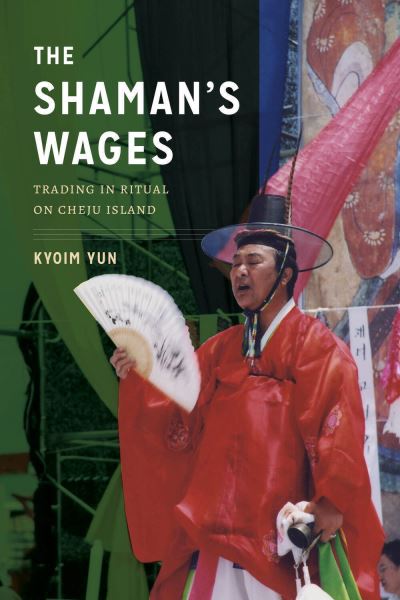
Breaking from previous scholarship on Korean shamanism, which focuses on mansin of mainland Korea, The Shaman's Wages offers the first in-depth study of simbang, hereditary shamans on Cheju Island off the peninsula's southwest coast. In this engaging ethnography enriched by extensive historical research, Kyoim Yun explores the prevalent and persistent ambivalence toward practitioners, whose services have long been sought out yet derided as wasteful by anti-shaman commentators and occasionally by their clients.
Intrigued by discord between simbang and their clients over fee negotiations, Yun set out to learn the deep-rooted legacy of condemning or trivializing the practitioners' self-interests, from a neo-Confucian governor's purge of shrines during the Choson dynasty to the recent transformation of a community ritual into a practice recognized through UNESCO World Heritage status. Drawing on a wealth of firsthand observations, she shows how simbang distinguish ritual exchanges from more mundane instances of bartering, purchasing, bribing, and gift giving and explains why ritual affairs are nonetheless inevitably thorny. This original study illuminates the intertwining of religion and economy in shamanic practice on Cheju Island.
| ISBN: | 9780295745954 |
| Publication date: | 30th September 2019 |
| Author: | Kyoim Yun |
| Publisher: | University of Washington Press |
| Format: | Paperback |
| Pagination: | 256 pages |
| Series: | Korean Studies of the Henry M. Jackson School of International Studies |
| Genres: |
Asian history Indigenous, ethnic and folk religions and spiritual beliefs Social groups: religious groups and communities |
Breaking from previous scholarship on Korean shamanism, which focuses on mansin of mainland Korea, The Shaman's Wages offers the first in-depth study of simbang, hereditary shamans on Cheju Island off the peninsula's southwest coast. In this engaging ethnography enriched by extensive historical research, Kyoim Yun explores the prevalent and persistent ambivalence toward practitioners, whose services have long been sought out yet derided as wasteful by anti-shaman commentators and occasionally by their clients.
Intrigued by discord between simbang and their clients over fee negotiations, Yun set out to learn the deep-rooted legacy of condemning or trivializing the practitioners' self-interests, from a neo-Confucian governor's purge of shrines during the Choson dynasty to the recent transformation of a community ritual into a practice recognized through UNESCO World Heritage status. Drawing on a wealth of firsthand observations, she shows how simbang distinguish ritual exchanges from more mundane instances of bartering, purchasing, bribing, and gift giving and explains why ritual affairs are nonetheless inevitably thorny. This original study illuminates the intertwining of religion and economy in shamanic practice on Cheju Island.
The Shaman's Wages features in the following genres: Asian history, Indigenous, ethnic and folk religions and spiritual beliefs, Social groups: religious groups and communities
The Shaman's Wages is available in Hardback, Paperback
The Shaman's Wages was written by Kyoim Yun and published by University of Washington Press
The Shaman's Wages has 256 pages
Yes it is part of Korean Studies of the Henry M. Jackson School of International Studies series
£31.46