

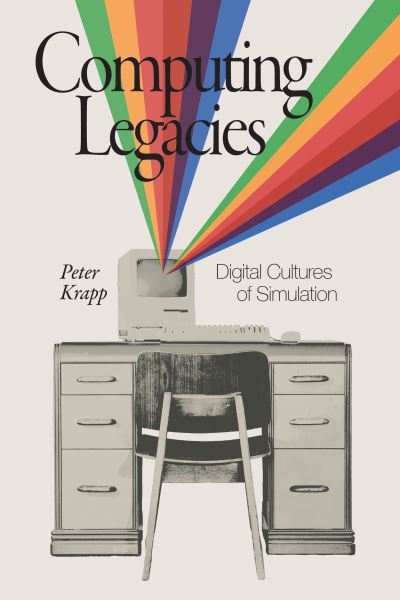
A media history of simulation that contextualizes our digital heritage and the history of computing. In Computing Legacies, Peter Krapp explores a media history of simulation to excavate three salient aspects of digital culture. First, it profiles simulation as cultural technique, enabling symbolic work and foregrounding hypothetical literacy. Secondly, it positions simulation as crucial for the preservation of cultural memory, where modeling, emulation, and serious play are constitutive in how we relate to our mediated history. And lastly, despite suggestions that we may already live in a simulation, it interrogates how simulation can serve as critique of the computer age. In tracing our digital heritage, Computing Legacies elucidates inflection points where quantitative data becomes tractable for qualitative evaluations: modeling epidemics for scientific study or entertainment, emulating older devices, turning numerical calculations into music, conducting espionage in virtual worlds, and gamifying higher education. Simulation, this book demonstrates, is pivotal not only to high-tech research or to archives, museums, and the preservation of digital culture, but also to our understanding of what it is to live and work under the technical conditions of computing.
| ISBN: | 9780262549837 |
| Publication date: | 22nd November 2024 |
| Author: | Peter Krapp |
| Publisher: | The MIT Press |
| Format: | Paperback |
| Pagination: | 222 pages |
| Genres: |
Computer modelling and simulation |
A media history of simulation that contextualizes our digital heritage and the history of computing. In Computing Legacies, Peter Krapp explores a media history of simulation to excavate three salient aspects of digital culture. First, it profiles simulation as cultural technique, enabling symbolic work and foregrounding hypothetical literacy. Secondly, it positions simulation as crucial for the preservation of cultural memory, where modeling, emulation, and serious play are constitutive in how we relate to our mediated history. And lastly, despite suggestions that we may already live in a simulation, it interrogates how simulation can serve as critique of the computer age. In tracing our digital heritage, Computing Legacies elucidates inflection points where quantitative data becomes tractable for qualitative evaluations: modeling epidemics for scientific study or entertainment, emulating older devices, turning numerical calculations into music, conducting espionage in virtual worlds, and gamifying higher education. Simulation, this book demonstrates, is pivotal not only to high-tech research or to archives, museums, and the preservation of digital culture, but also to our understanding of what it is to live and work under the technical conditions of computing.
Computing Legacies features in the following genres: Computer modelling and simulation
Computing Legacies is available in Paperback
Computing Legacies was written by Peter Krapp and published by The MIT Press
Computing Legacies has 222 pages
£29.70