

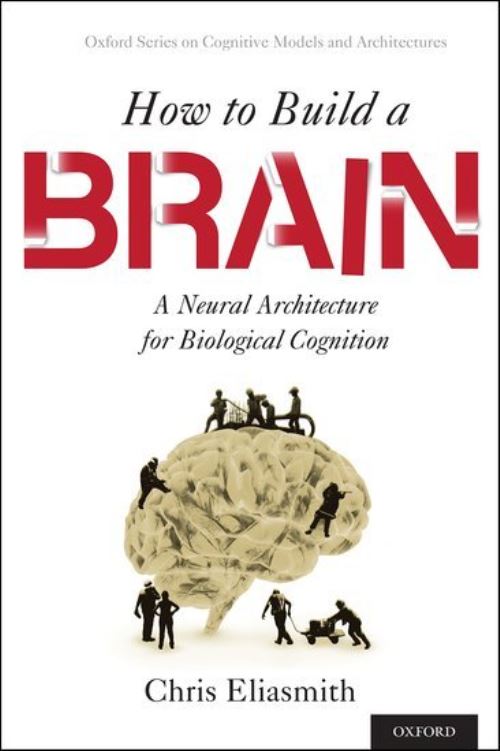
In this book, Chris Eliasmith presents a new approach to understanding the neural implementation of cognition in a way that is centrally driven by biological considerations. He calls the general architecture that results from the application of this approach the Semantic Pointer Architecture (SPA), based on the Semantic Pointer Hypothesis. According to this hypothesis, higher-level cognitive functions in biological systems are made possible by semantic pointers.
These pointers are neural representations that carry partial semantic content and can be built up into the complex representational structures necessary to support cognition. The SPA architecture demonstrates how neural systems generate, compose, and control the flow of semantics pointers. Eliasmith describes in detail the theory and empirical evidence supporting the SPA, and presents several examples of its application to cognitive modeling, covering the generation of semantic pointers from visual data, the application of semantic pointers for motor control, and most important, the use of semantic pointers for representation of language-like structures, cognitive control, syntactic generalization, learning of new cognitive strategies, and language-based reasoning.
He agues that the SPA provides an alternative to the dominant paradigms in cognitive science, including symbolicism, connectionism, and dynamicism.
| ISBN: | 9780199794546 |
| Publication date: | 27th June 2013 |
| Author: | Chris Eliasmith |
| Publisher: | Oxford University Press an imprint of OUP USA |
| Format: | Hardback |
| Pagination: | 480 pages |
| Series: | Oxford Series on Cognitive Models and Architectures |
| Genres: |
Computer science Neurosciences Cognitivism, cognitive theory Cognition and cognitive psychology Neurology and clinical neurophysiology |
In this book, Chris Eliasmith presents a new approach to understanding the neural implementation of cognition in a way that is centrally driven by biological considerations. He calls the general architecture that results from the application of this approach the Semantic Pointer Architecture (SPA), based on the Semantic Pointer Hypothesis.
How to Build a Brain features in the following genres: Computer science, Neurosciences, Cognitivism, cognitive theory, Cognition and cognitive psychology, Neurology and clinical neurophysiology
Paperback, Hardback, Ebook. £148.50, down from the £165.00 cover price. Not Available.
How to Build a Brain was written by Chris Eliasmith and published by Oxford University Press an imprint of OUP USA
How to Build a Brain has 480 pages
Yes it is part of Oxford Series on Cognitive Models and Architectures series
£148.50, reduced from £165.00. Not Available.